Polearms are a special challenge in LARP, since they’ve got to remain strong and rigid enough to maneuver as six-foot-long foam weapons in mock combat, while, as usual, being being padded enough to not hurt anyone and being light as possible. These spears represent a test of carbon fiber tubes from a site with a lot of options and often unhelpful site design. But they also have some interesting decorative inlays. Let’s start with those.

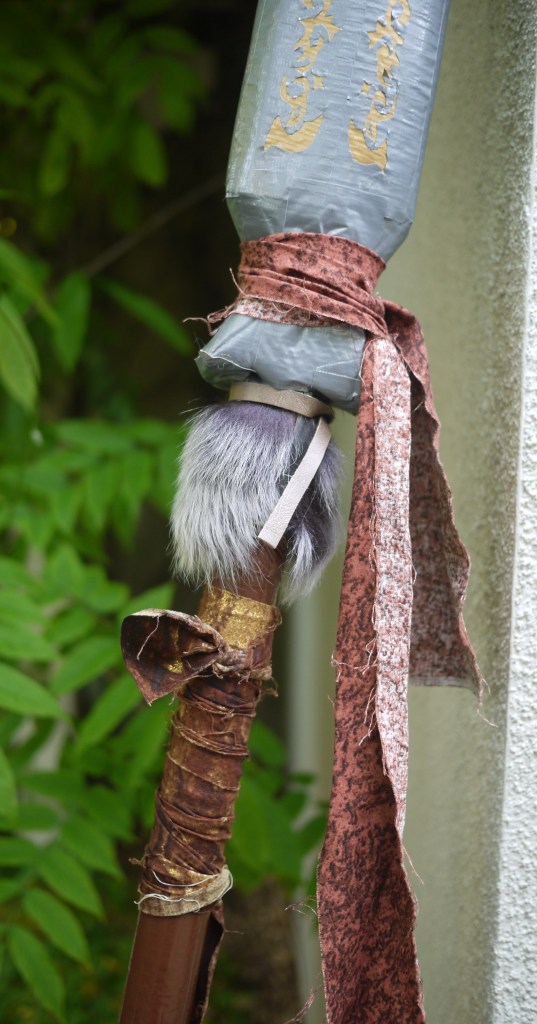

The spear shown above is for a character who comes from a tribe of people who have survived harsh climates of deserts and arid steppes, so I based the design on this spear from the Aiel people of the Wheel of Time series (pictured on right). I added fabric I got from FabMo, a nonprofit that takes the extra samples of fabric that would otherwise be thrown away after being used for trade shows.
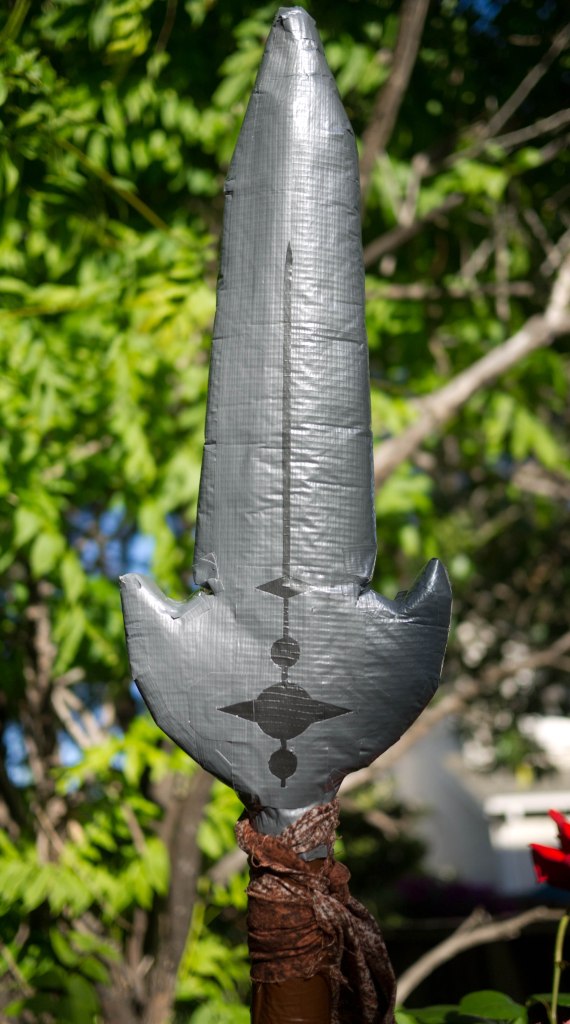
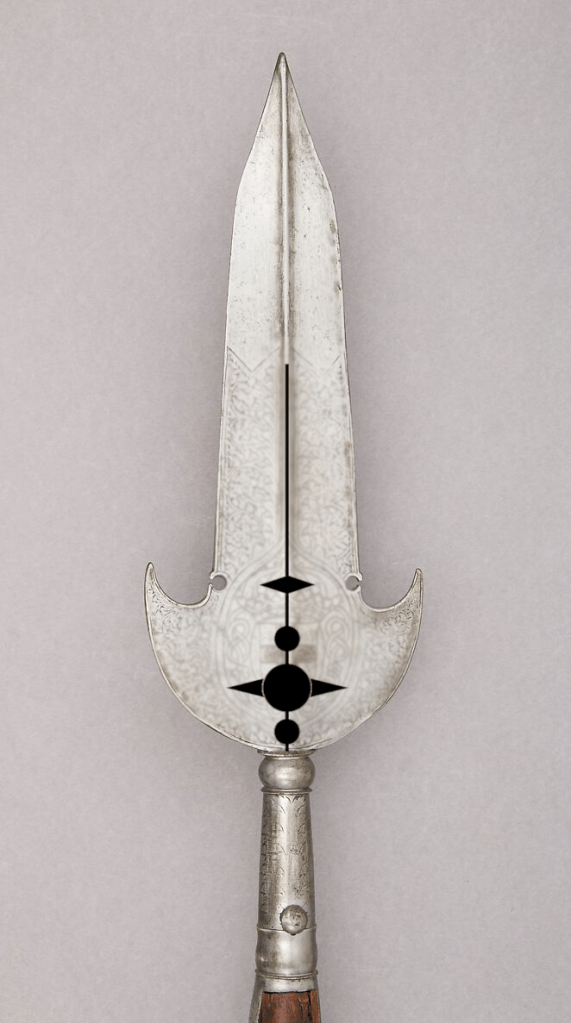
The spear shown above is for a character with a deep background in the “Old Hunters” clan, which is so named not only for their aptitude with hunting beasts but also for their origins hunting more dramatic foes. I decided to model the blade’s shape on a type of polearm called a partisan. The secondary wings on the sides are reminiscent of the lugs on the sides of a bear spear, which serve to keep huge and dangerous quarry at a distance even when the spearhead would otherwise pierce too deep. The partisan polearm’s wings, while similar, are intended to help block and parry weapons. So it could be used for either legendary beasts or weapon-wielding foes. Plus, it looks nice — it was a design that continued to be used by officers as signs of rank even after the invention of practical gunpowder-based weapons.
The dark-grey line with circles and angular shapes is for the character’s specific visual motif, inspired by the aesthetic of another series.
On to the construction:
Both of these spears are examples of the Composite Foam approach I’ve used for many pieces, in which I mix different foams to achieve better specifications of strength, lightness, and safety.
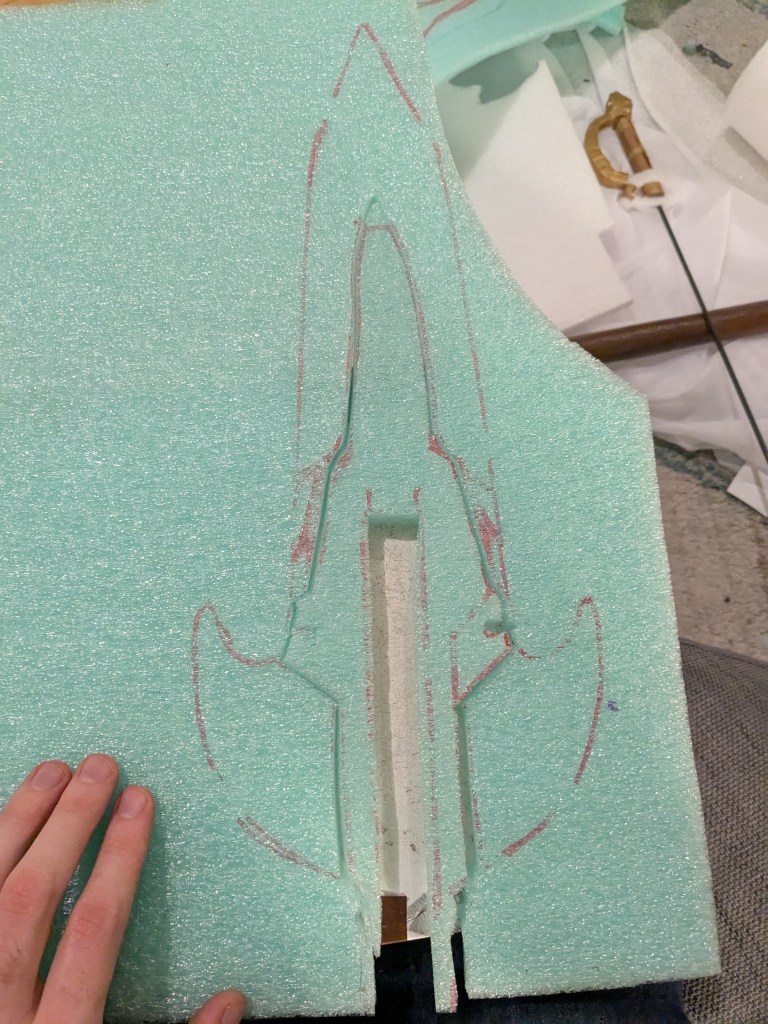
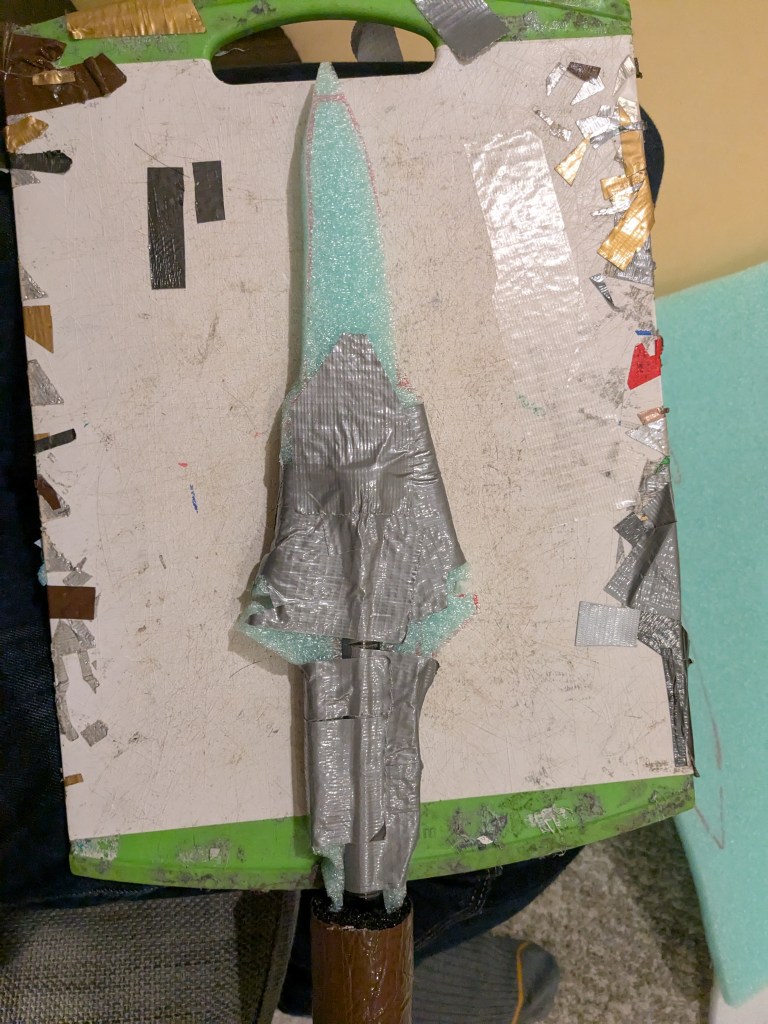
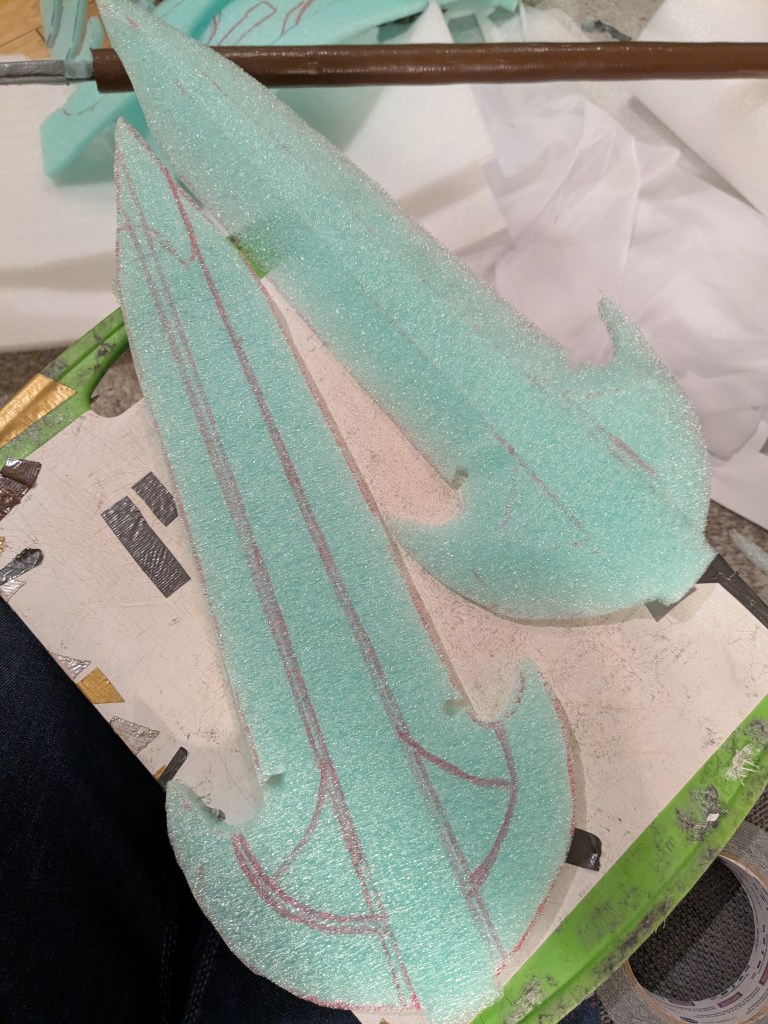
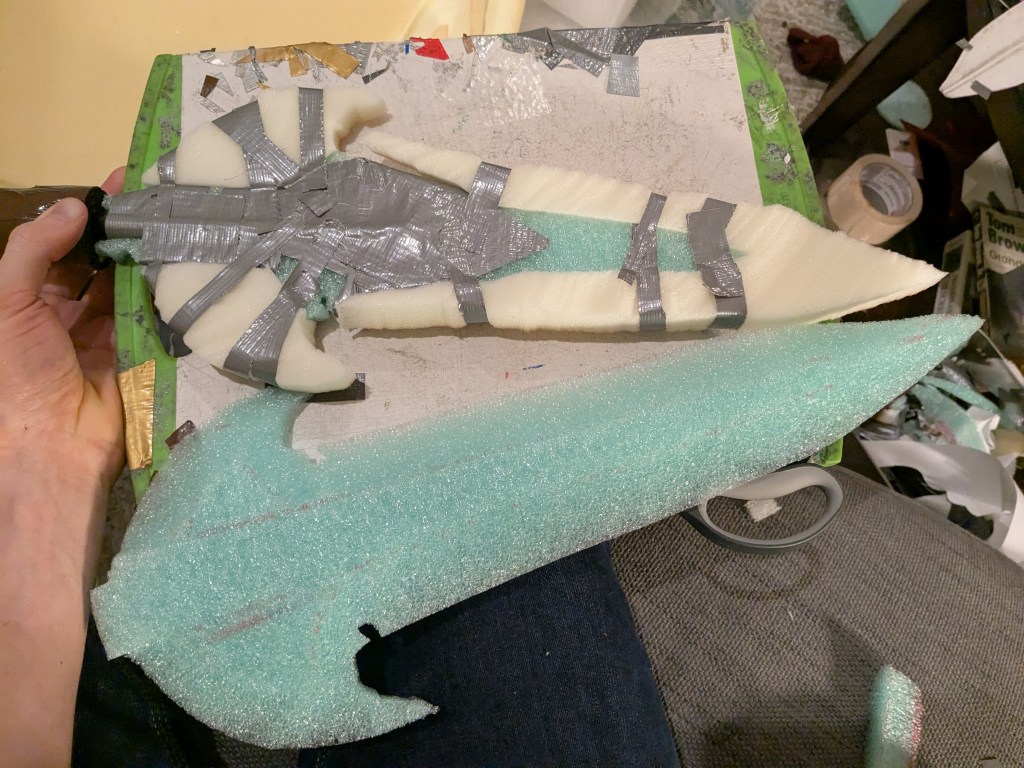

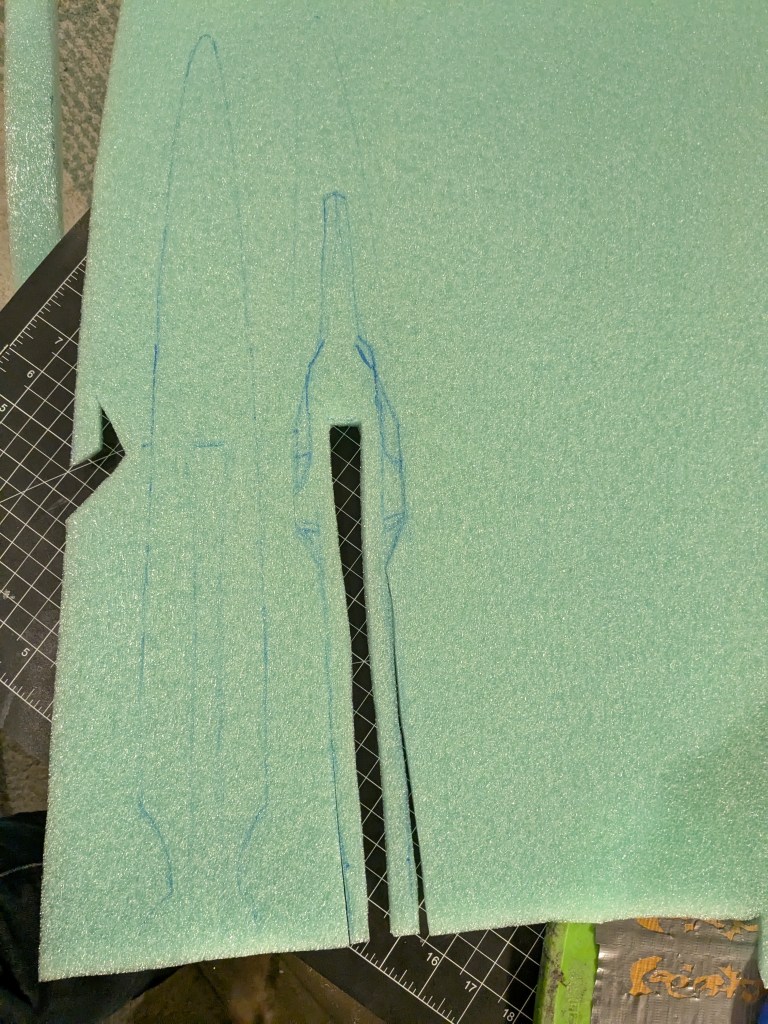
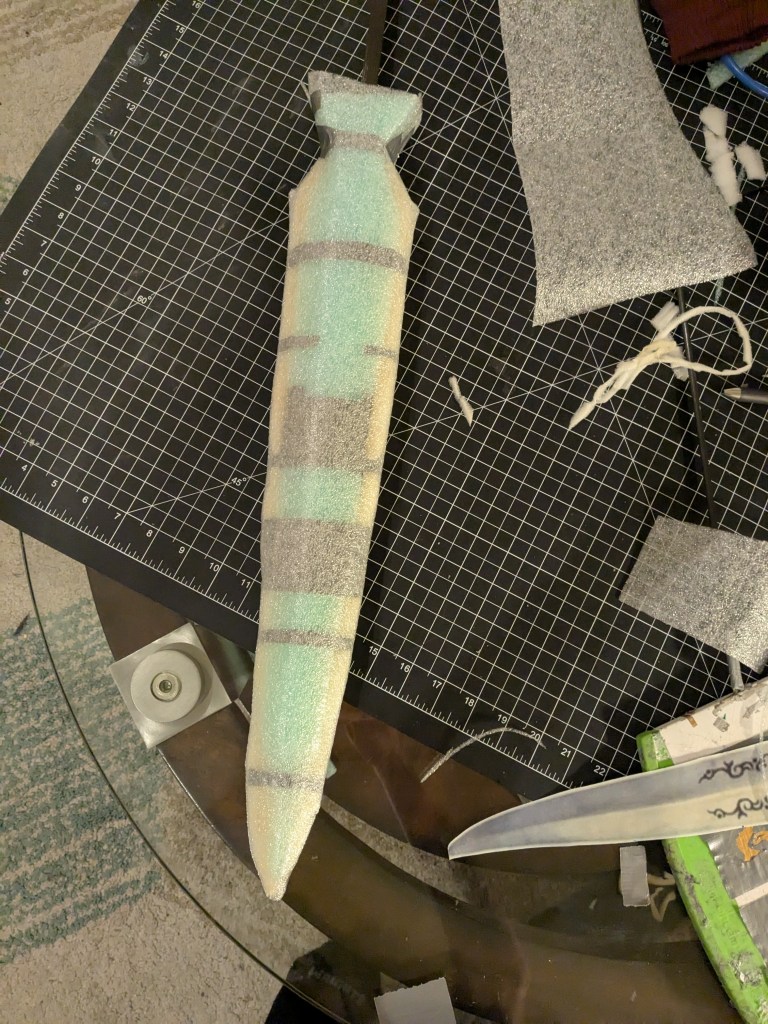

In both cases, there’s a main stack of three main layers of foam. The middle layer of the main stack is partly closed-cell (green) foam against the carbon fiber core, and partly open-cell (light yellow) foam, to provide extra softness in external areas. Then, I wrap the whole thing in a very thin layer of packing foam, cutting and taping it to fit exactly around the whole spearhead, then adding the final layer of duct tape on top, along with the decorative inlay.
So far, the test has been successful: At around six and a half feet long, and each weighing less than a pound (the more pointed one is 11.7 ounces, while the more winged one is 13.5), they are nevertheless strong enough to effectively fight, block, and win.
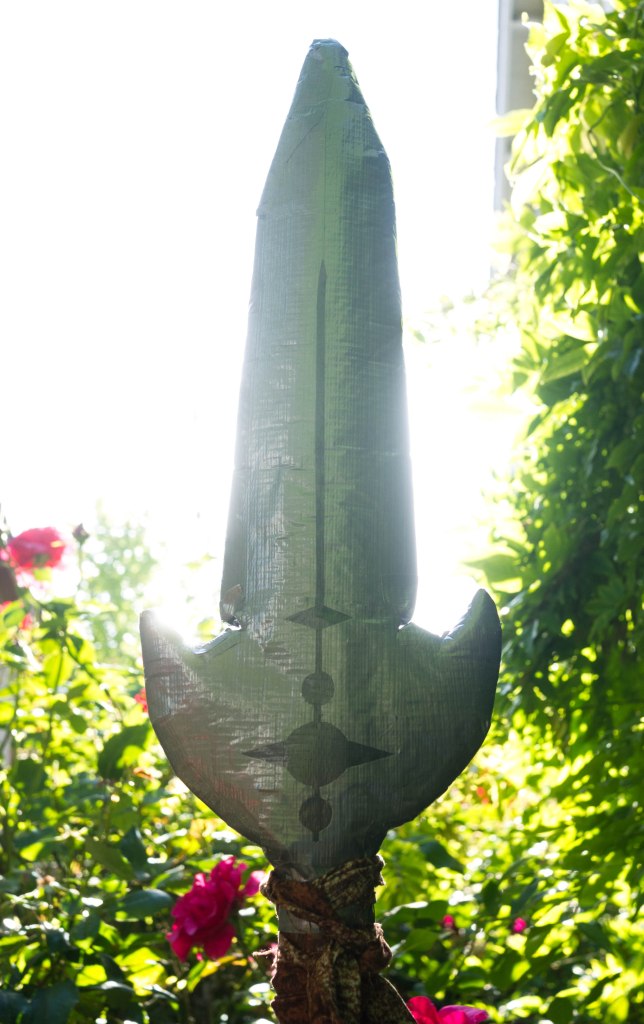

Update: You know how there are certain events that would be unethical to run experimentally on purpose, but which are illuminating to scientifically observe if they’re happening anyway? During a night mission with low visibility, one player fully stabbed another directly in the neck by accident with one of these spears, and was surprised to hear that it was not only non-injurious, but also, it did not even hurt, since the whole speartip structure compresses so softly. Amazing to hear of this engineering success.

 Nico's Workshop