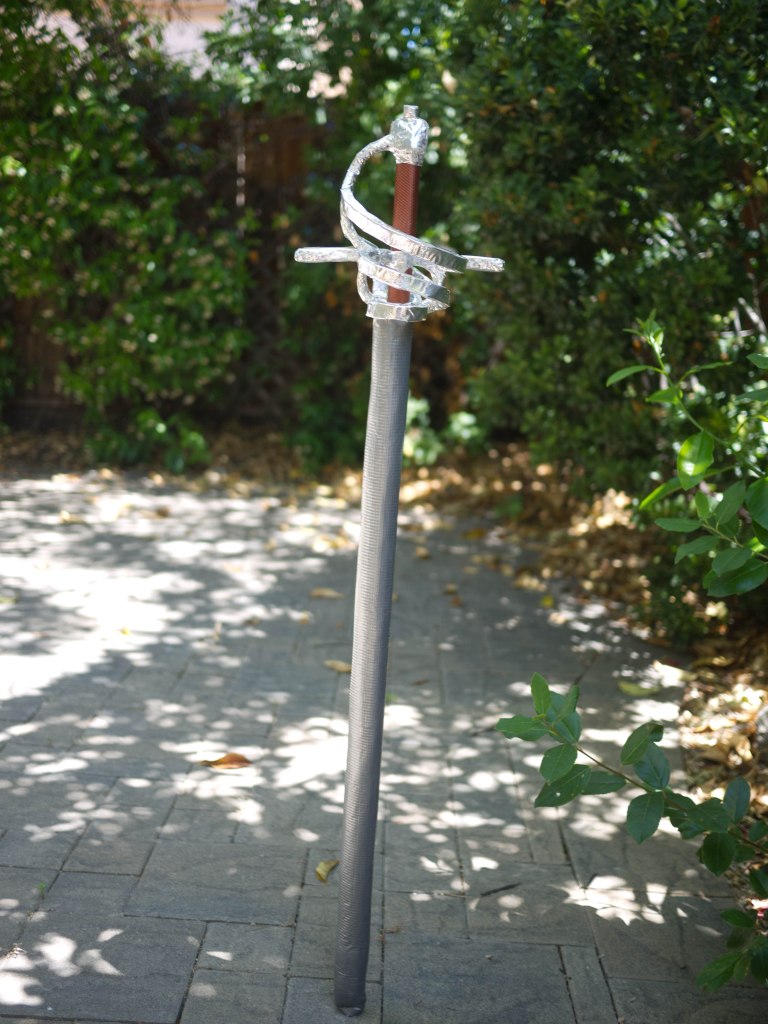
Three rapiers, alike in dignity (although personally I prefer the middle one), in fair adventuring where we lay our scene.
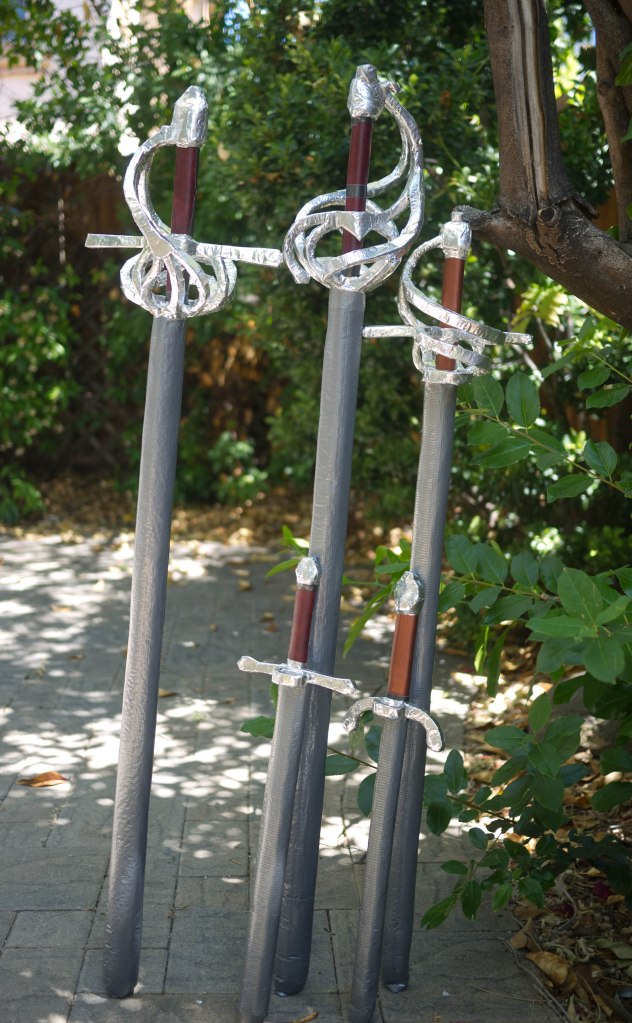
For 17th-century fashion, an essential part of any complete outfit.
The red-handled version without a straight crossguard is based on the same design as the dark-bladed rapier from last year. Historically, most rapiers did have a straight crossguard, so I made two in that way to reflect the ancient bladesmiths, but it must be said I really like the aesthetic of the one with just a curved quillon (the technical term for one side of a crossguard).
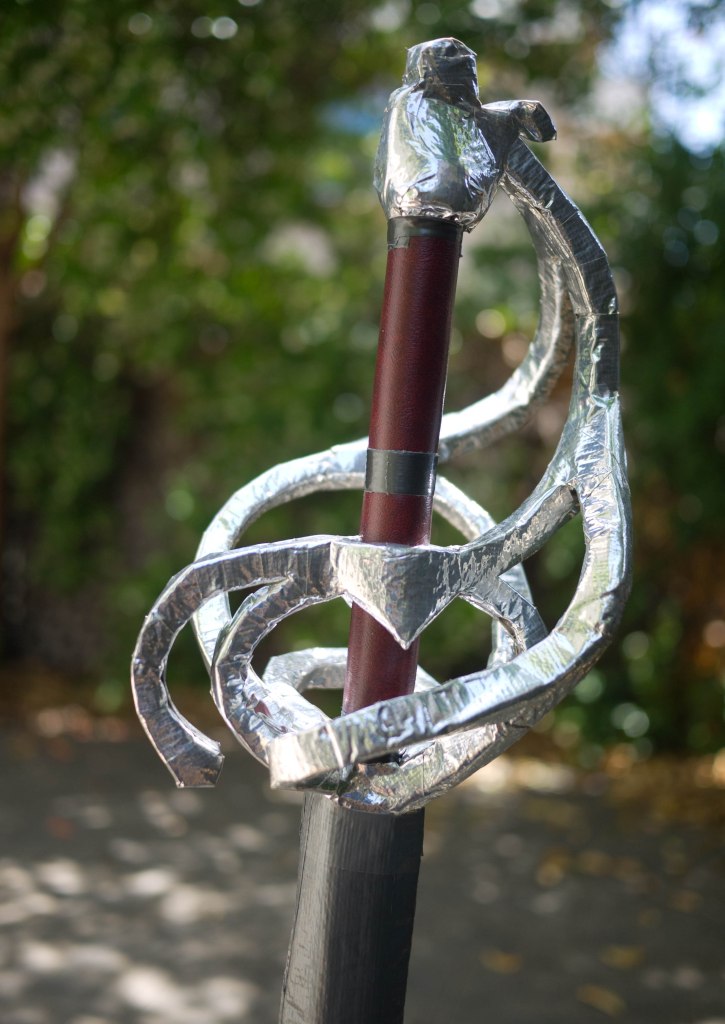
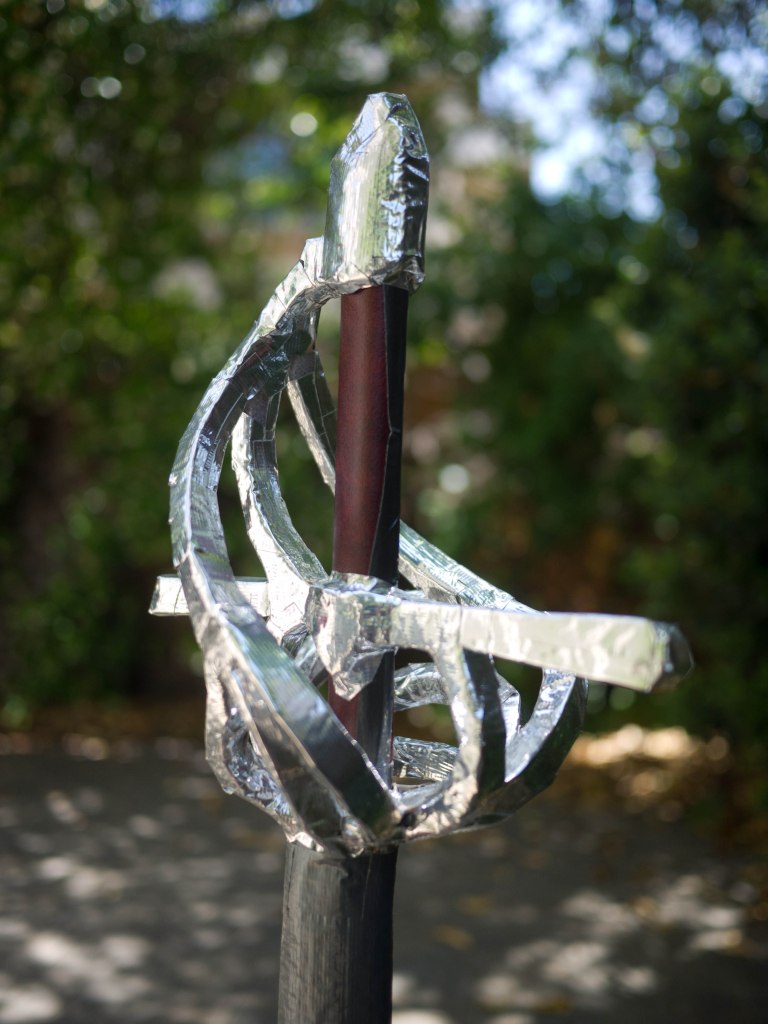
The orange-handled rapier’s design is based on the Arms & Armor Lombardy Rapier, which itself is based on an original circa 1580-1590 Italian Hilt.
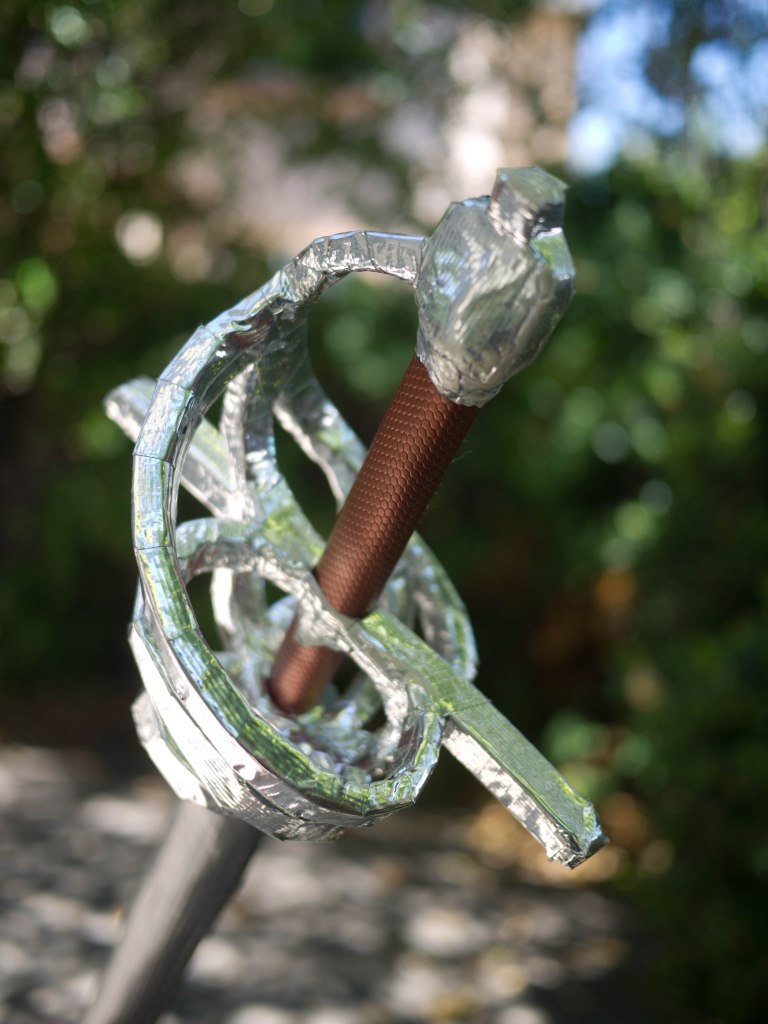
In two cases, I crafted an accompanying parrying dagger, as was the style of dueling for quite some time during the era of the rapier’s popularity for combat, before fencing became a sport. The side ring affords a small amount of protection to the knuckles, cutting off some angles so that the blade being blocked cannot easily rotate to cut them.
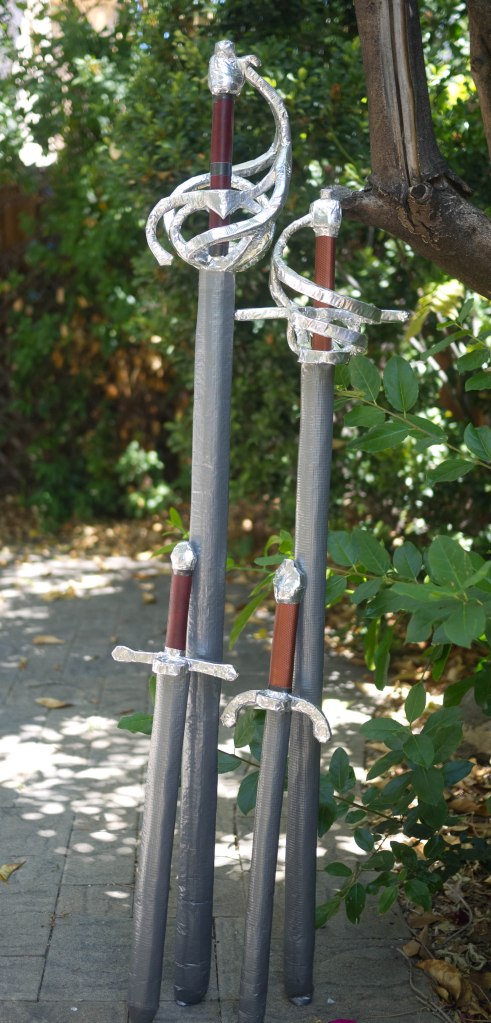
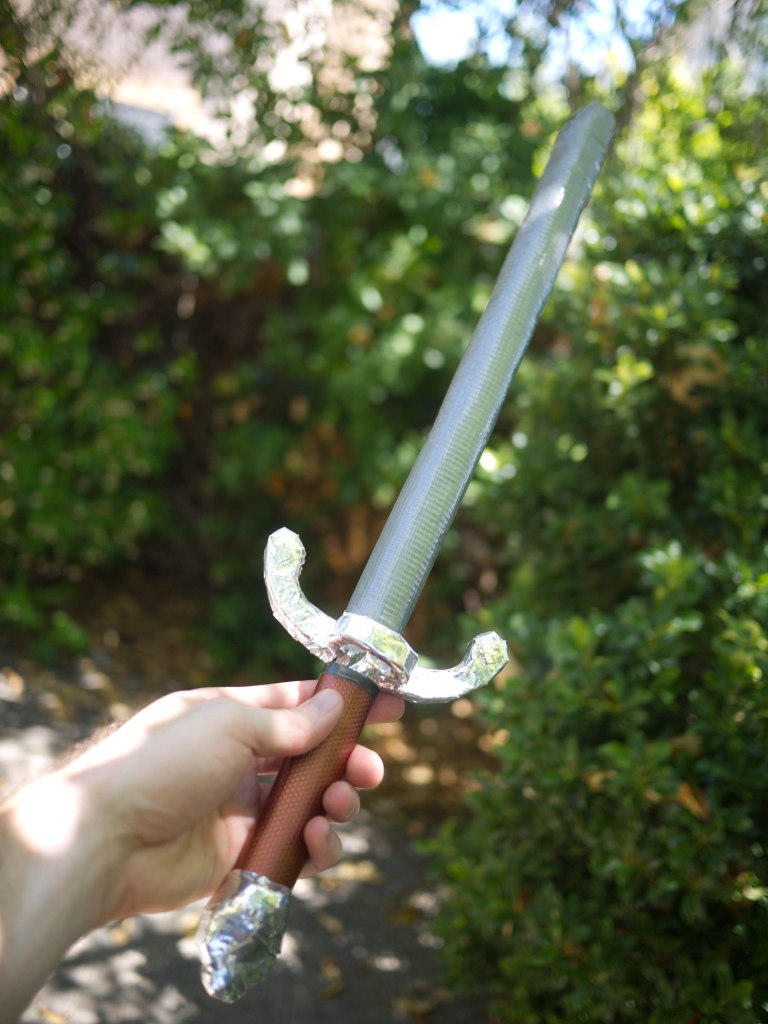
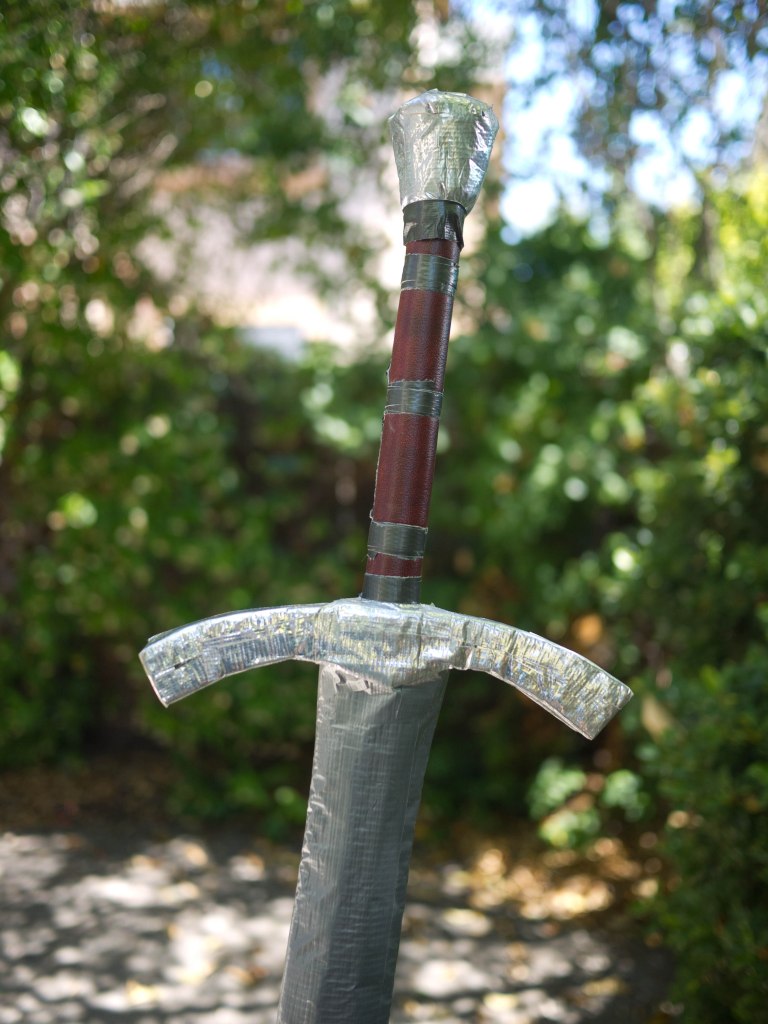
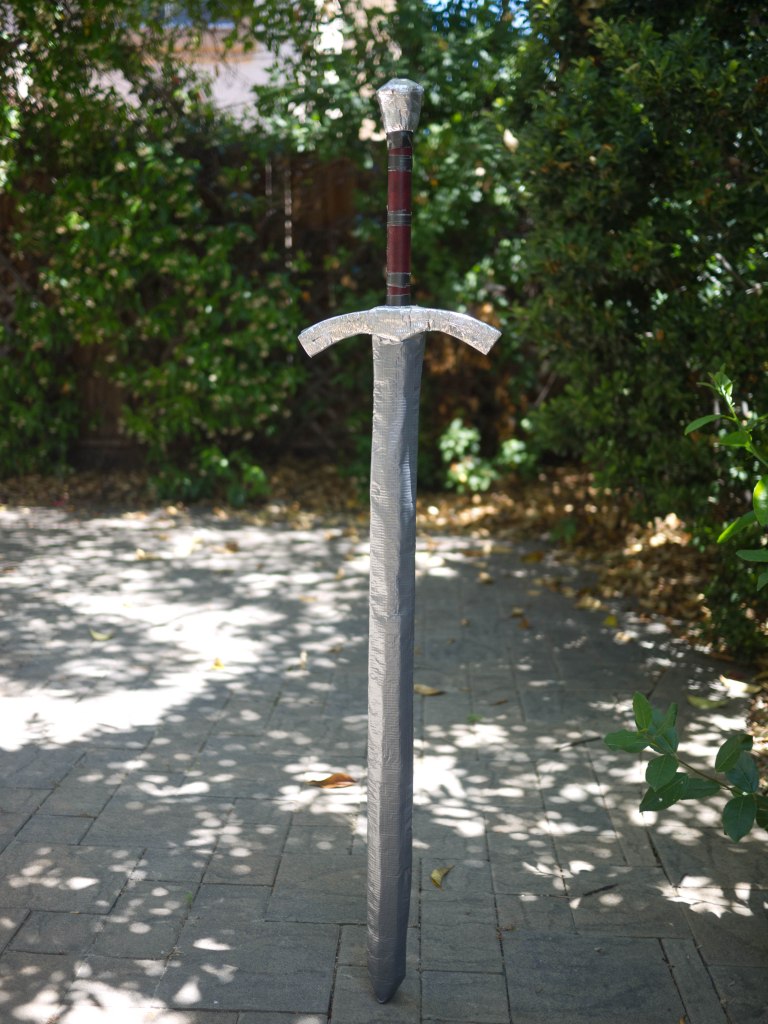
While I’m at it, here’s a picture of the longsword I also made around the same time with the same color palette as two of the rapiers.
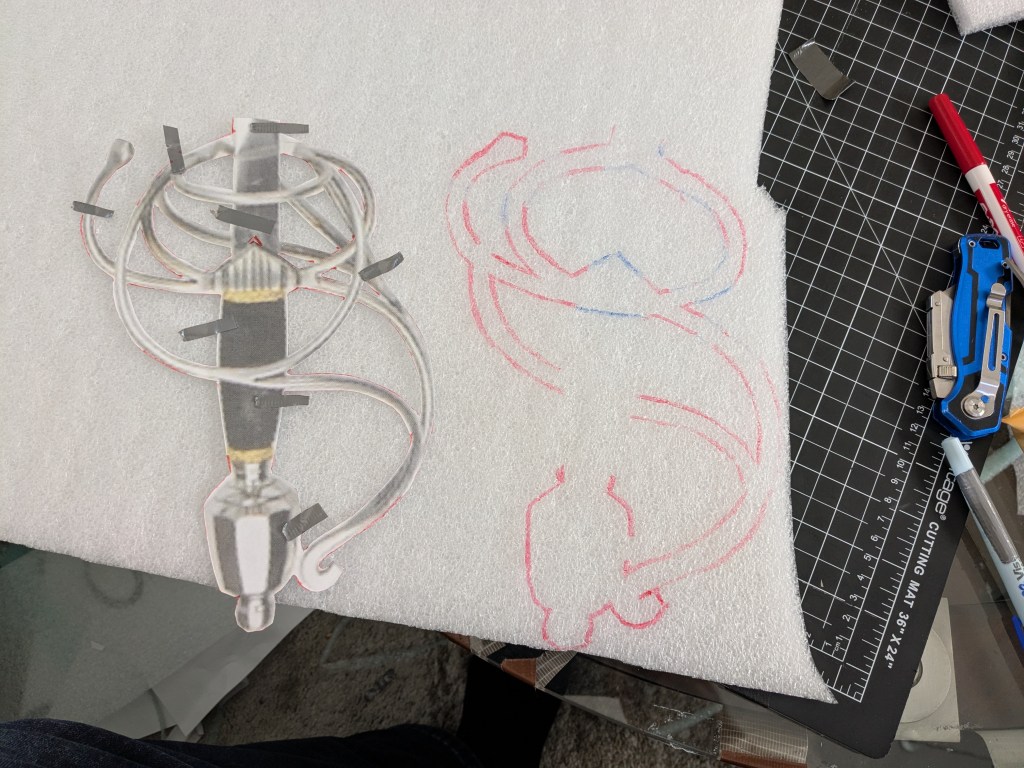
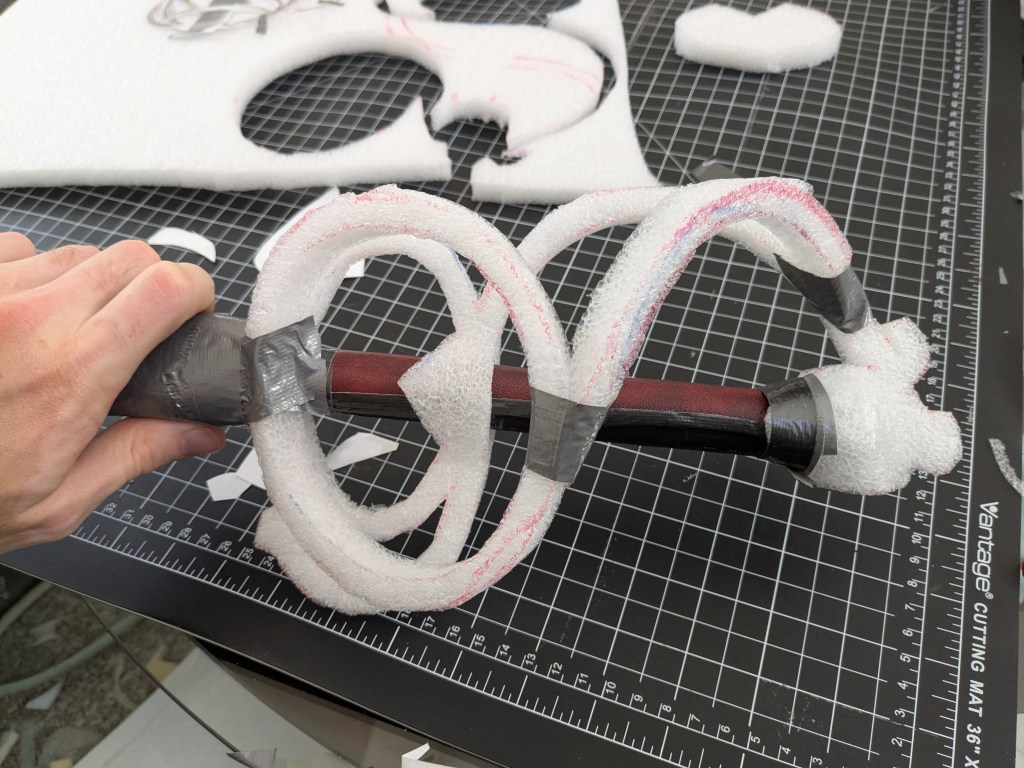
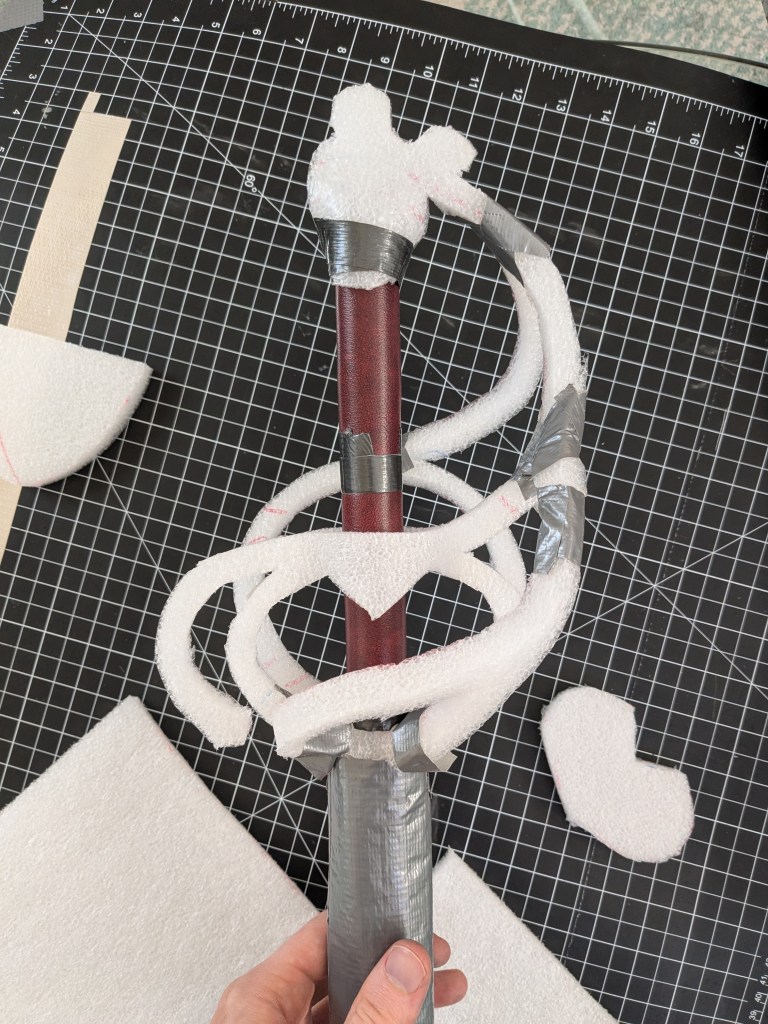
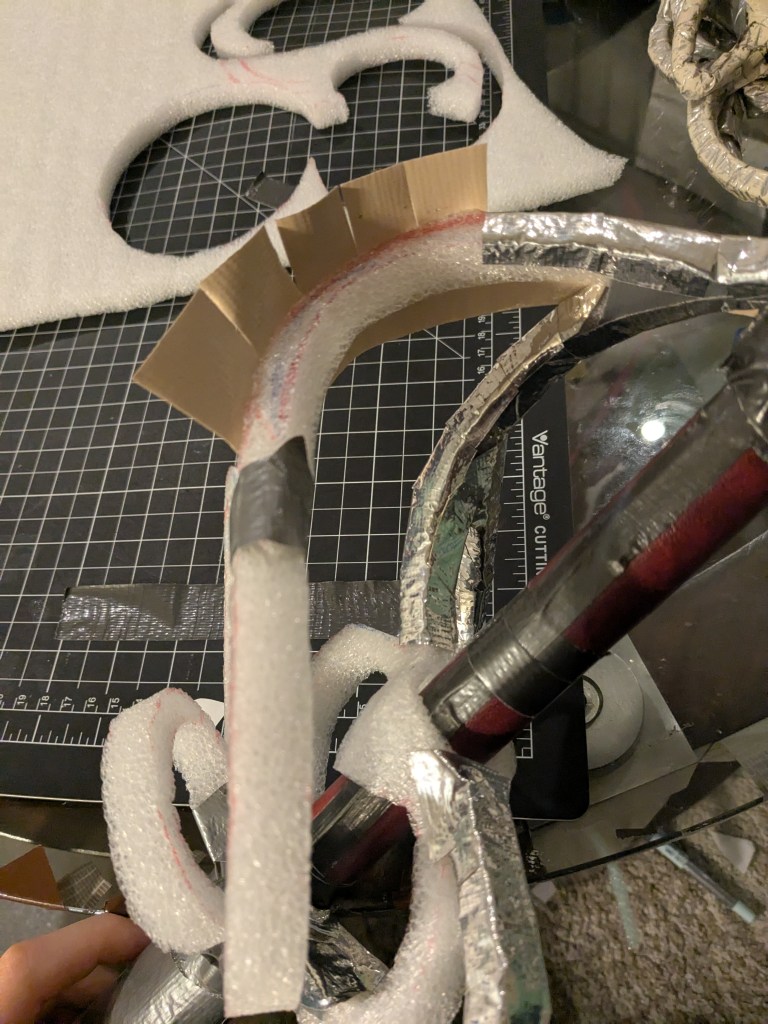
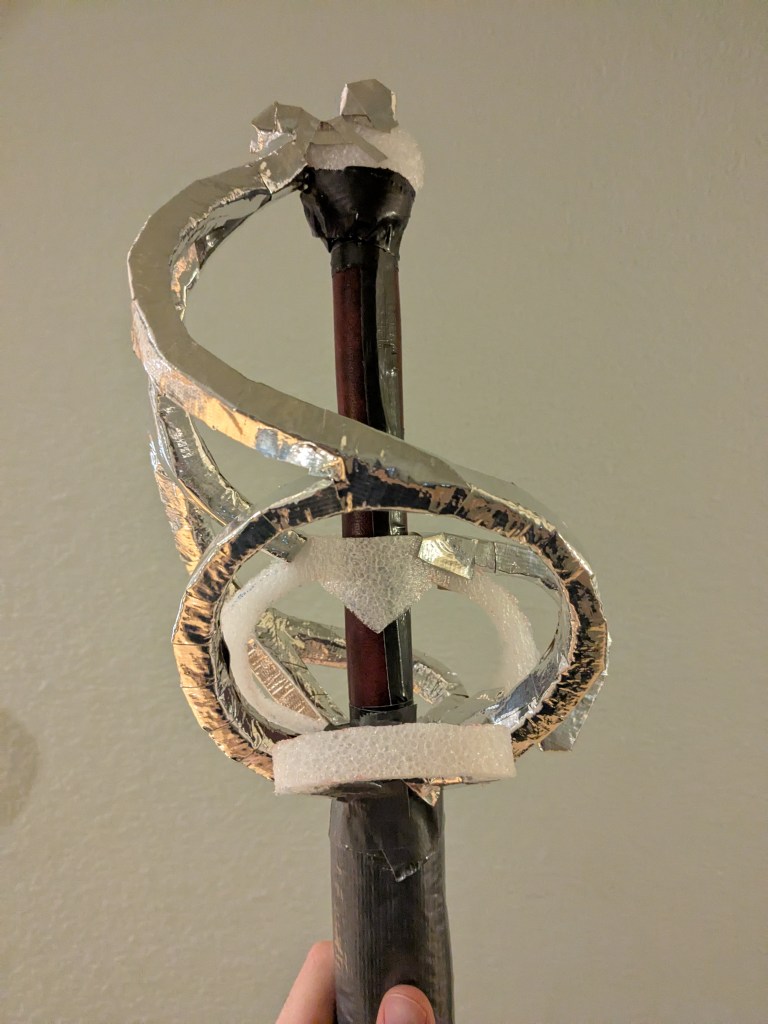
Making of the rapier hilt pictured below. Getting the myriad 3D curves right requires exceptional spatial estimation and visualization to make everything line up exactly once curved into place. Reminiscent of the challenges of map projections, if the Earth were shaped like a radish and you were really focusing on Greenland and Antarctica. Plus, lots of careful angular cuts to simultaneously allow each piece to join correctly with the others and maintain strength.
Fundamental principle used all over the place: note the duct tape is usually wrapped from the convex side of the curve, so that as tabs fold around the foam, they overlap to form a cohesive structure. For this handle, I used 2.2LB Density Polyethylene from Foam Factory.
One of these days, I might consider using “affiliate links,” but for now I’m just linking to stuff freely because I want people to be able to build on my findings of what works well.
The internal arrangement of the rapier blades use the same composite foam cross-section I developed for the Music Sword, with three different densities of foam arranged to create the optimal deceleration for lightness (and hence speed) and safety.
 Nico's Workshop