As a commission for a new LARPer who loves cats, I fashioned this sword with pawprints, cat’s tail, and a face/silhouette with glowing eyes!
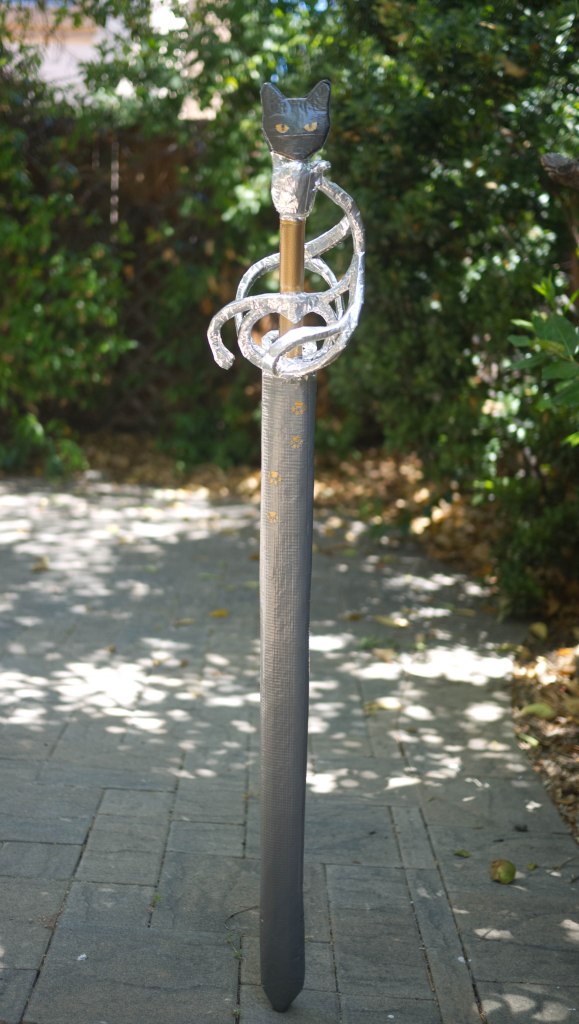
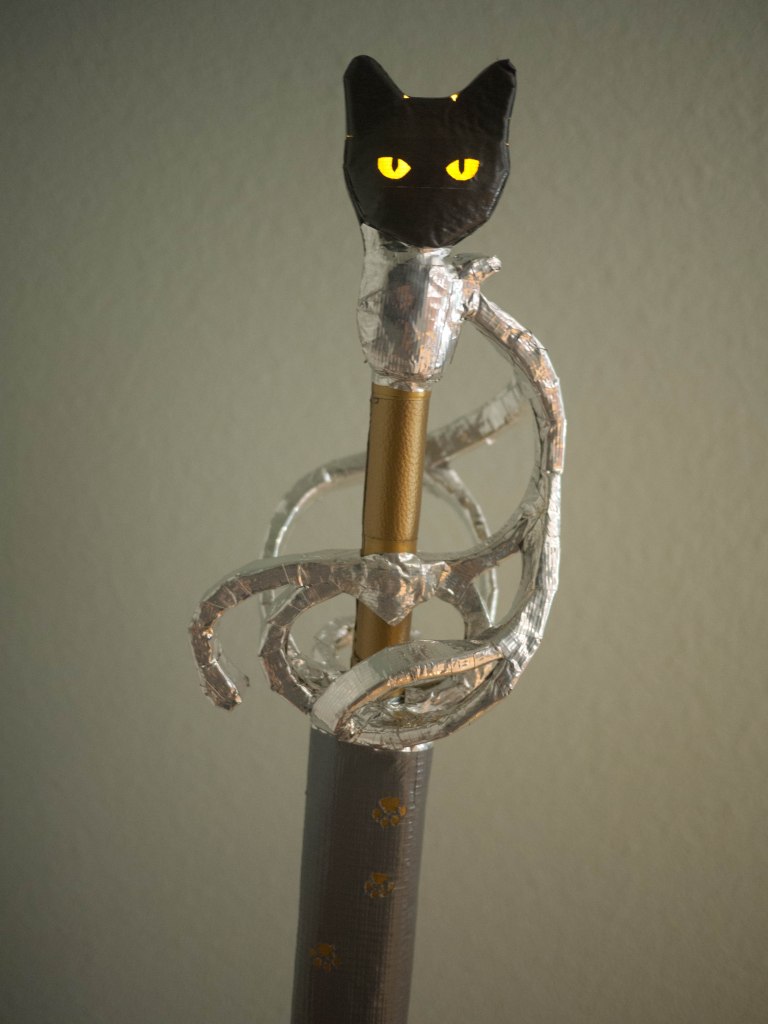
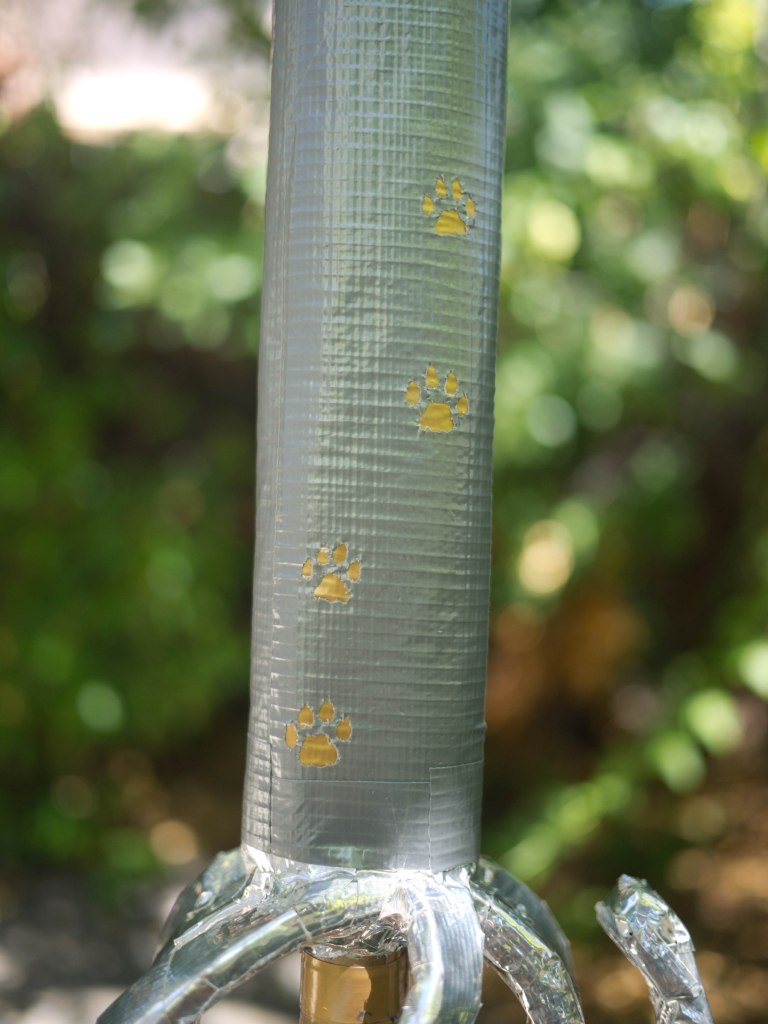
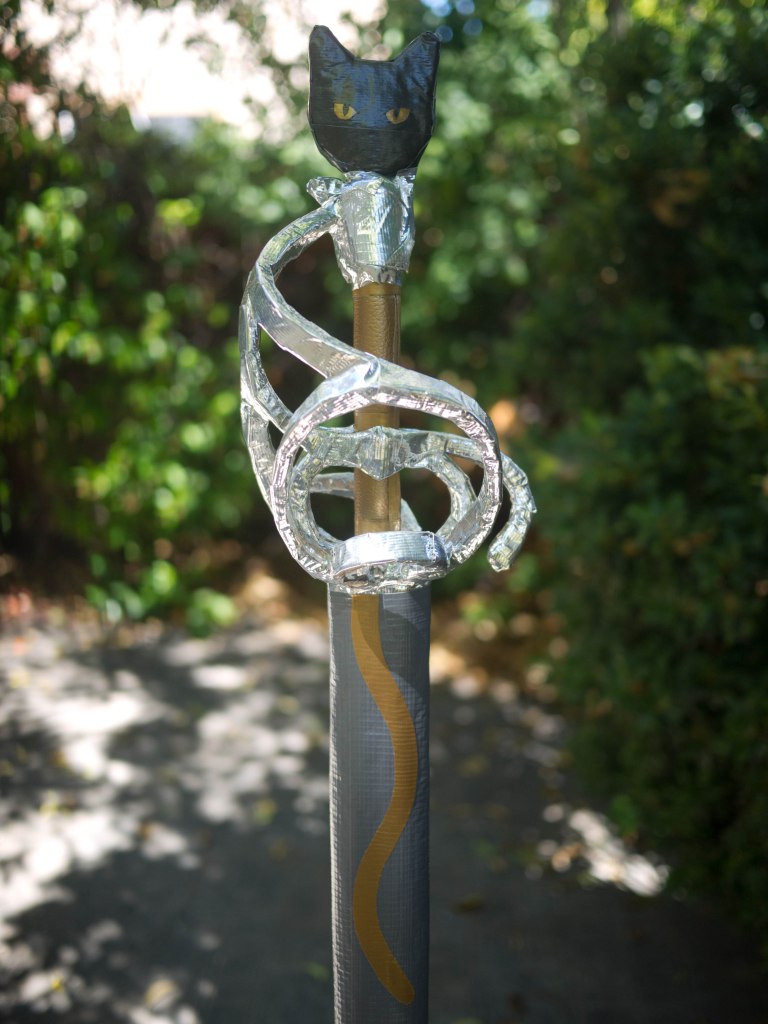
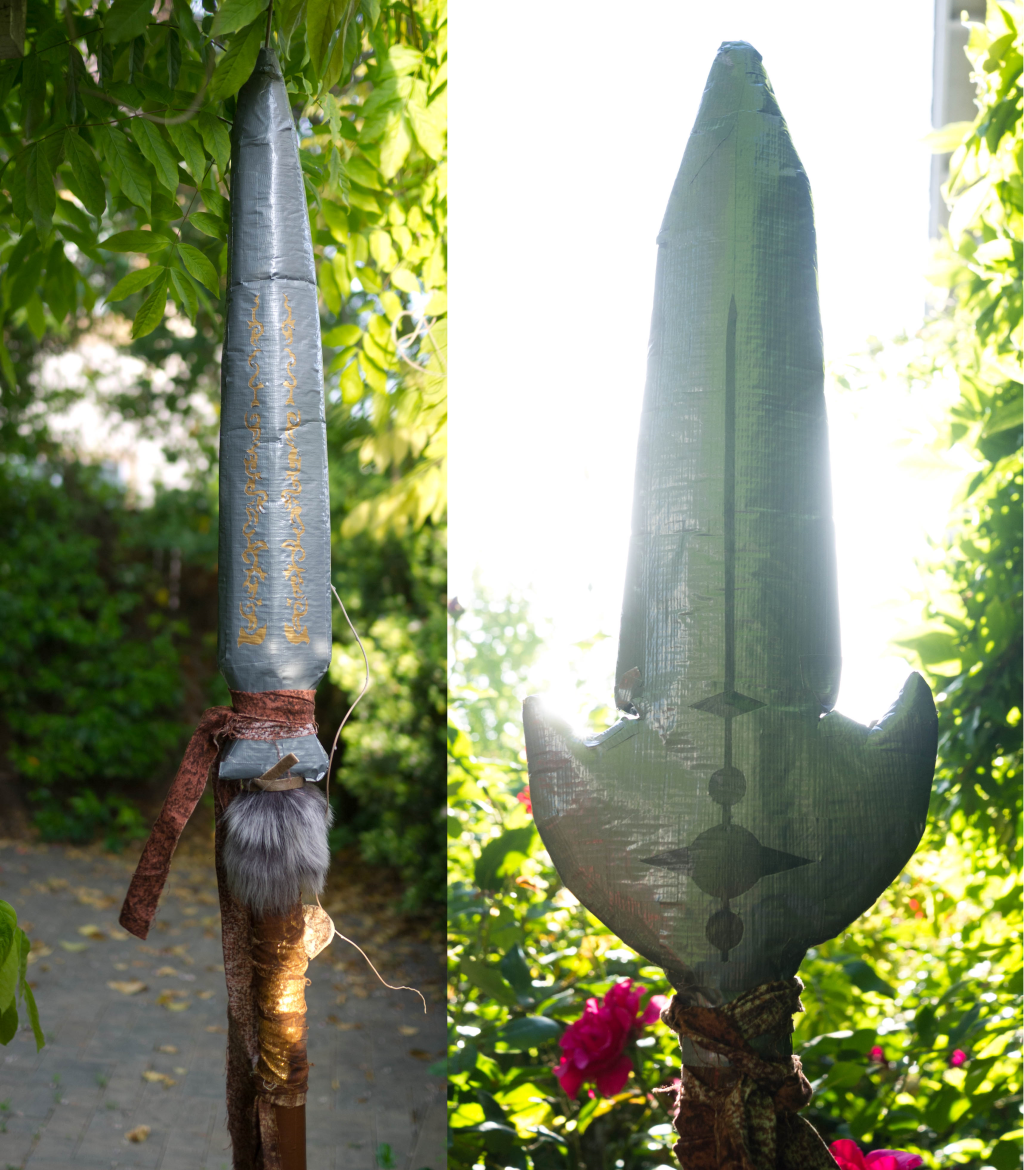
The blade uses the same composite foam technique as most of my rapiers: A layer of closed-cell foam with beveled edges along each side of the blade, plus an insert of open-cell foam on the striking edges between those sides, plus a coating of closed-cell foam surrounding the whole, underneath the layer of duct tape.
In this case, I widened the blade somewhat so that there’s more padding than a normal rapier, in case the user is somewhat more enthusiastic than planned.
Bonus discussion: How to hold rapiers. If your hand is small enough to use just the main part of the grip, then you can hold it however you want! If your hand is large enough that it doesn’t comfortably fit on just that one section, then you may want to use one of the traditional grips that puts your thumb and index finger up onto the ricasso, which, on metal rapiers, is the unsharpened part of the blade, and which on mine are the shorter section of handle above the quillion.
Here’s one illustration of some ways to do this from a historical fencing instructor:

And here’s me holding the sword with one of these grip styles:
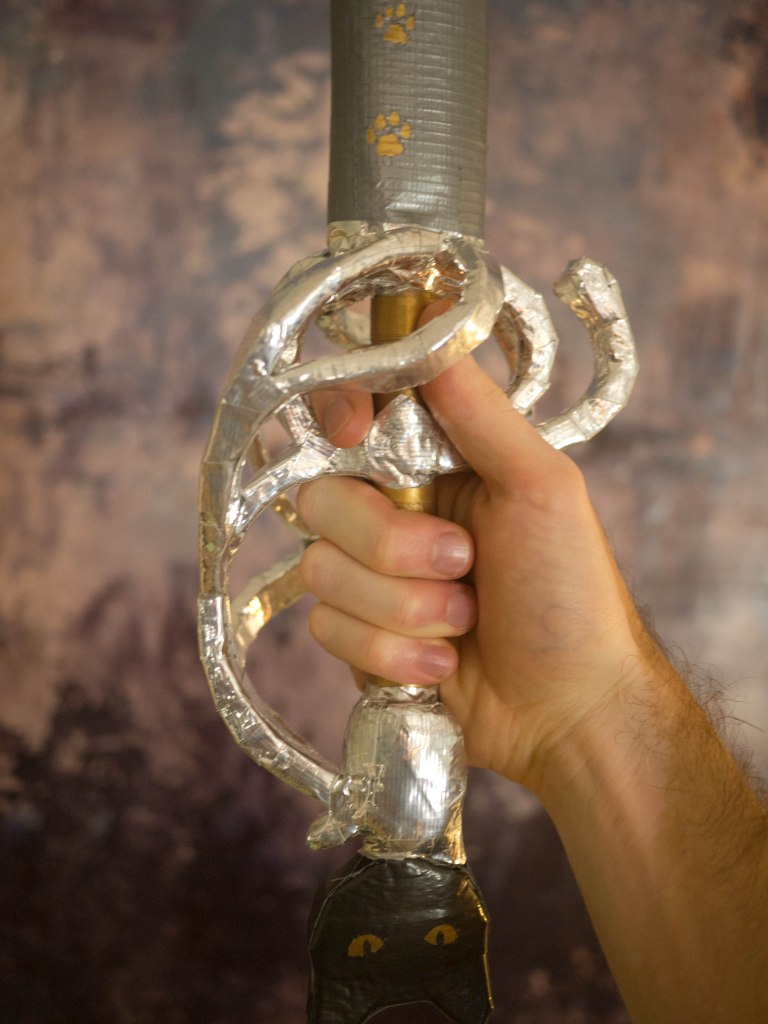
This gives you far more leverage to twirl the blade quickly, and especially allows your thumb to be in position to bring the sword’s angle up and down more effectively.
There are many, many ways that historical rapiers were held in the hand, so you can experiment a bit to see what works best for you.

 Nico's Workshop