There are many varieties and names of sword designs from Japan, starting in the 6th century. These LARP props are crafted to resemble and evoke certain historical designs.
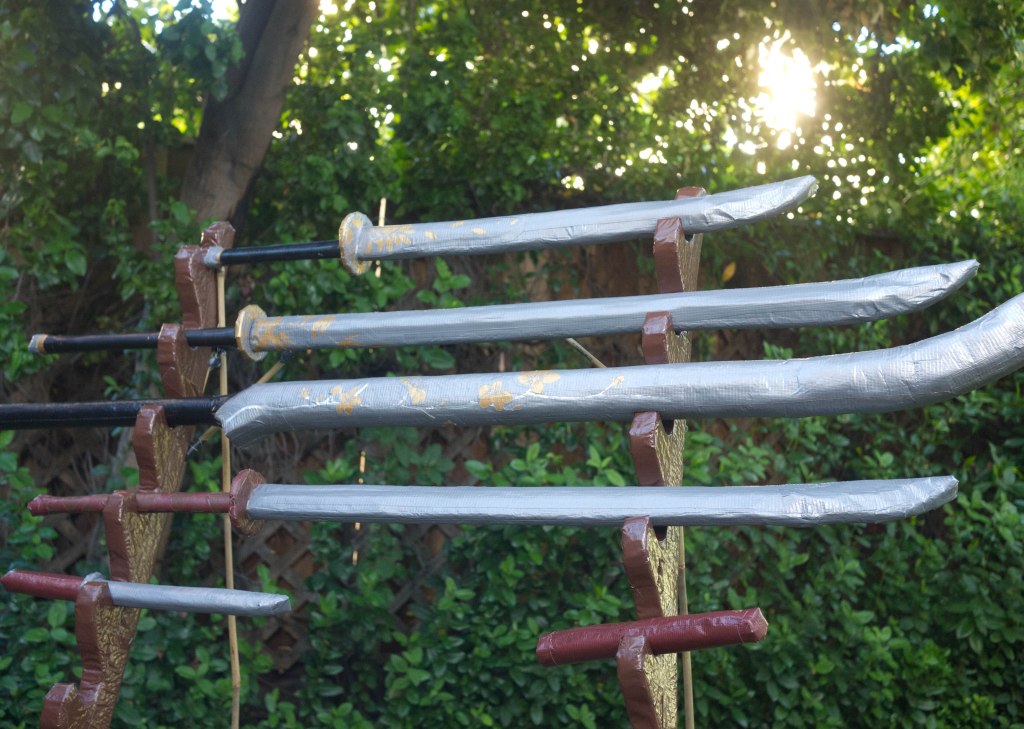
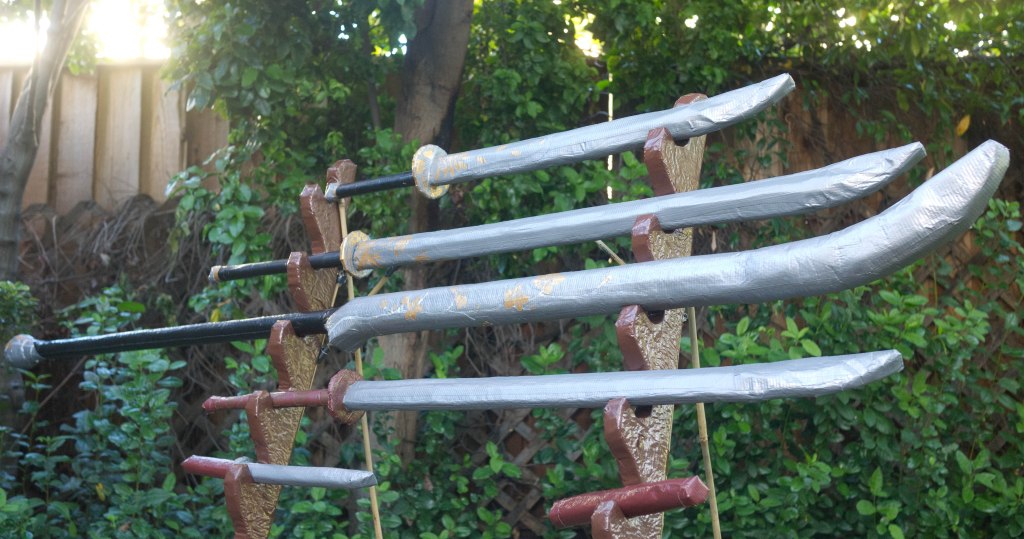
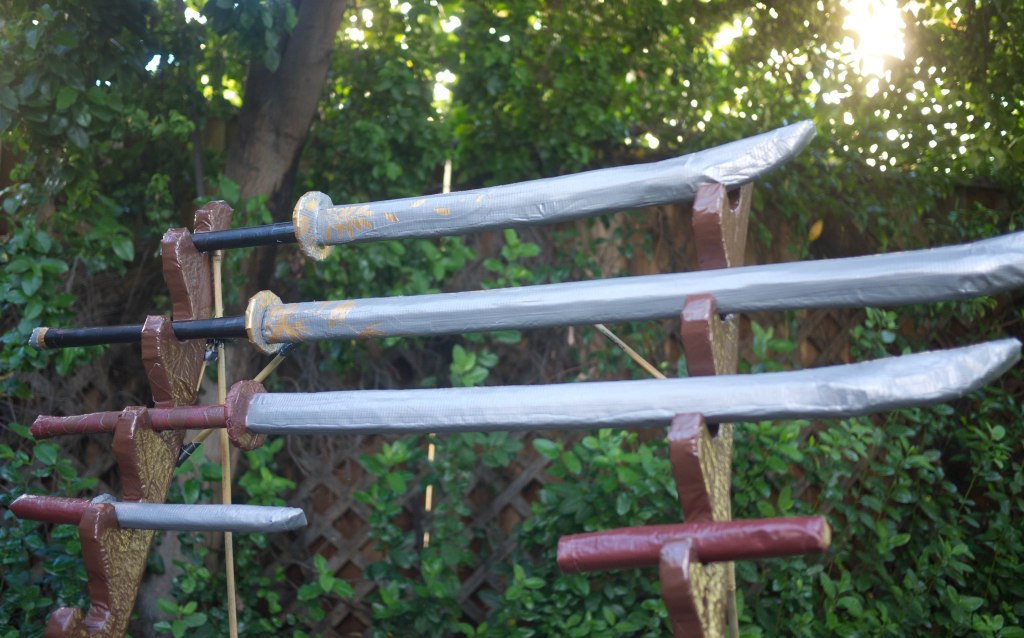
From top to bottom, here are boffers reminiscent of:
- Wakizashi (Japanese: 脇差, ‘side inserted [sword]’)
- Katana (刀, かたな; lit. ‘one-sided blade’)
- Nagamaki (長巻; “long wrapping”), with blade tip of a naginata (なぎなた, 薙刀, lit. ’mowing sword’)
- Katana
- Tantō (短刀, ‘short blade’)
Translations are from associated Wikipedia articles: [1] [2] [3] [4] [5]
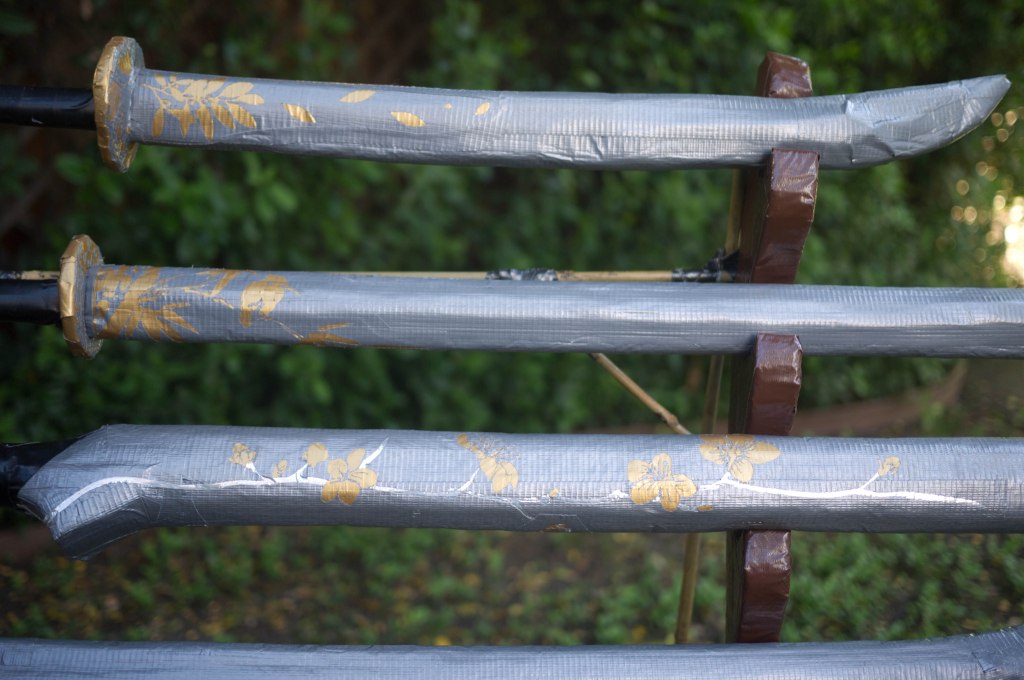
Here’s a close-up of the detailed inlays I created for these pieces:
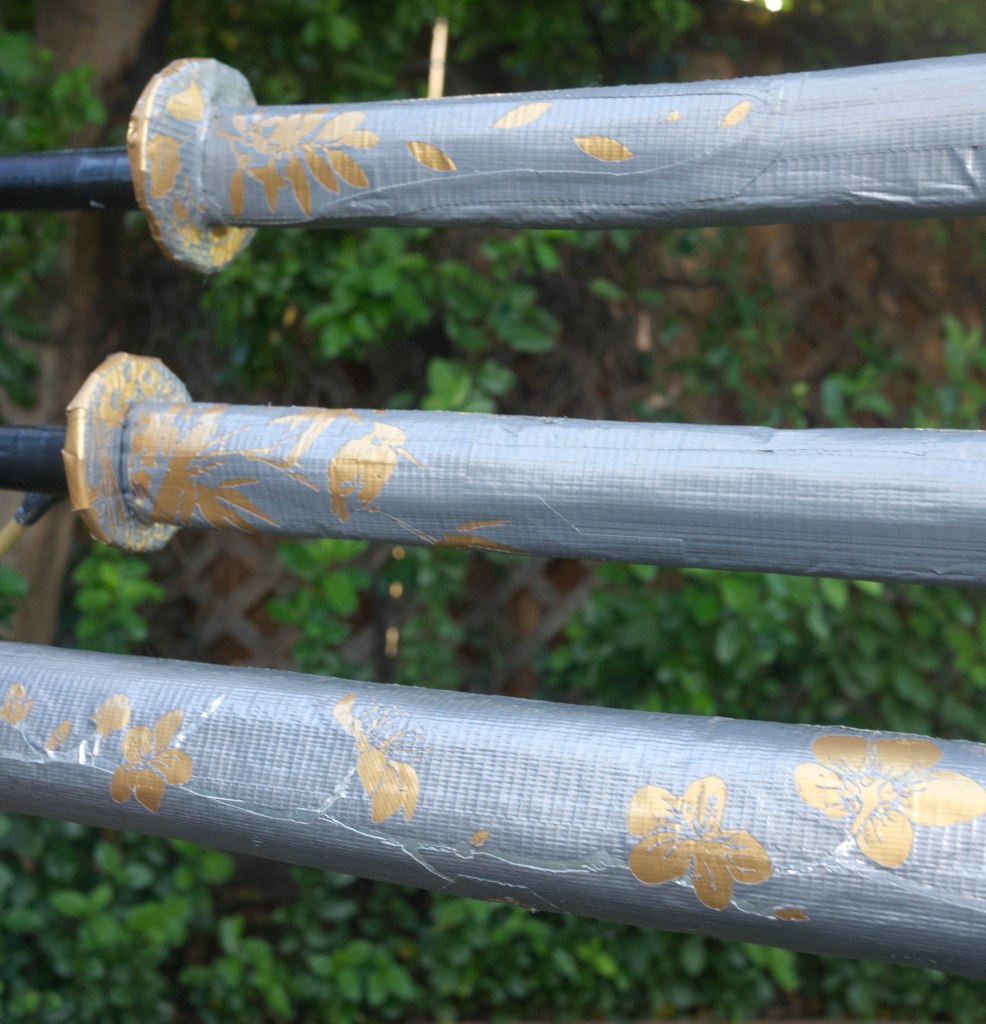
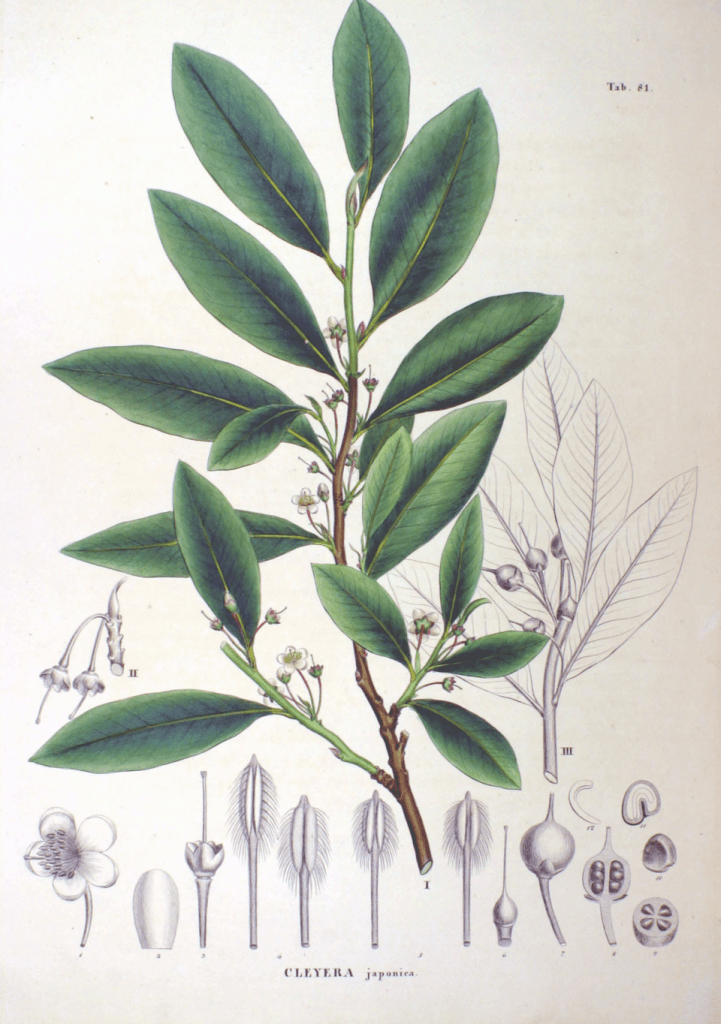
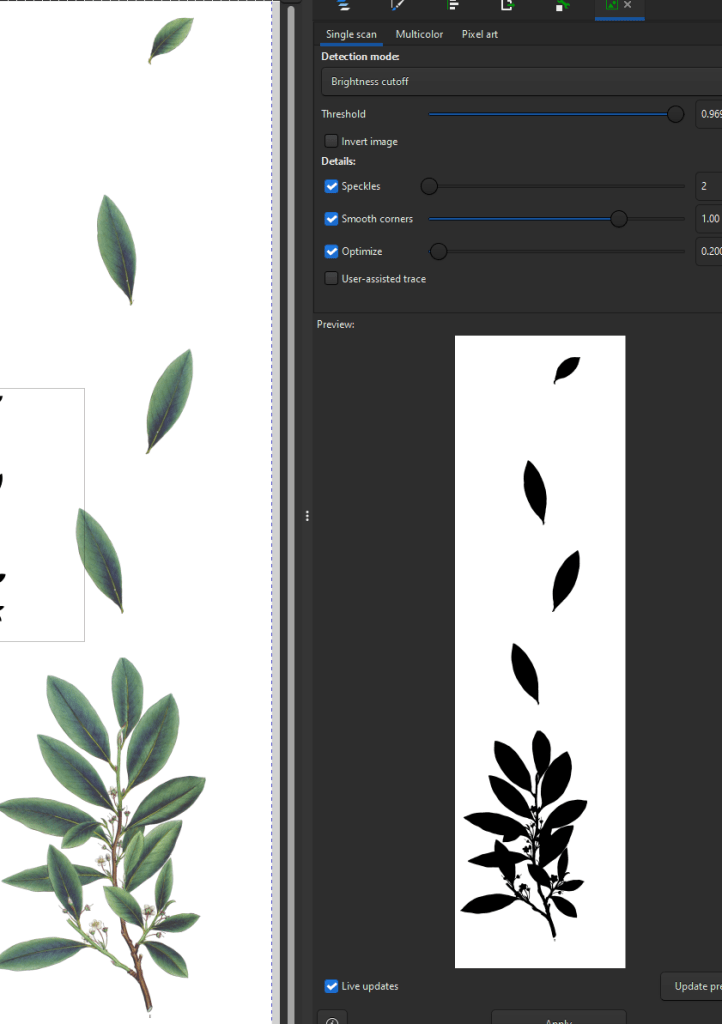
The top inlay, on the Wakizashi, is of the Sakaki tree (Cleyera japonica), which is important in Shinto. I started with a beautiful botanical illustration made in 1870, which I adjusted, cleaned, extrapolated, vectorized, customized, arranged, Cricut-sliced, and, as always, manually weeded (which is the term for removing all the parts of the tape other than the intended design, after cuts are applied).
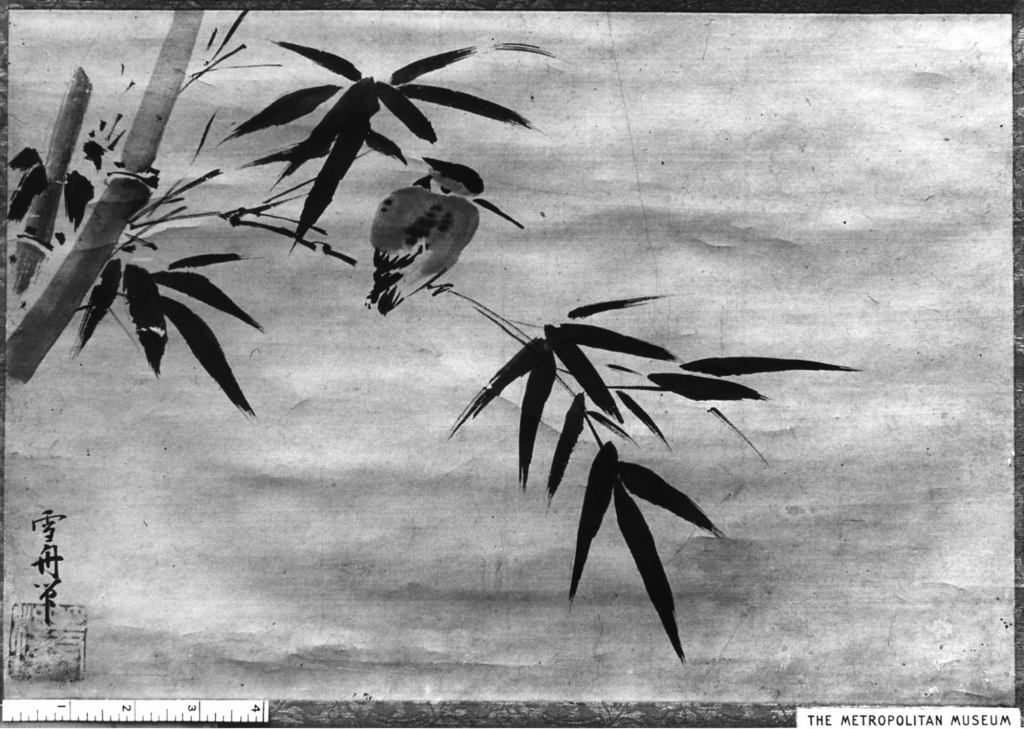
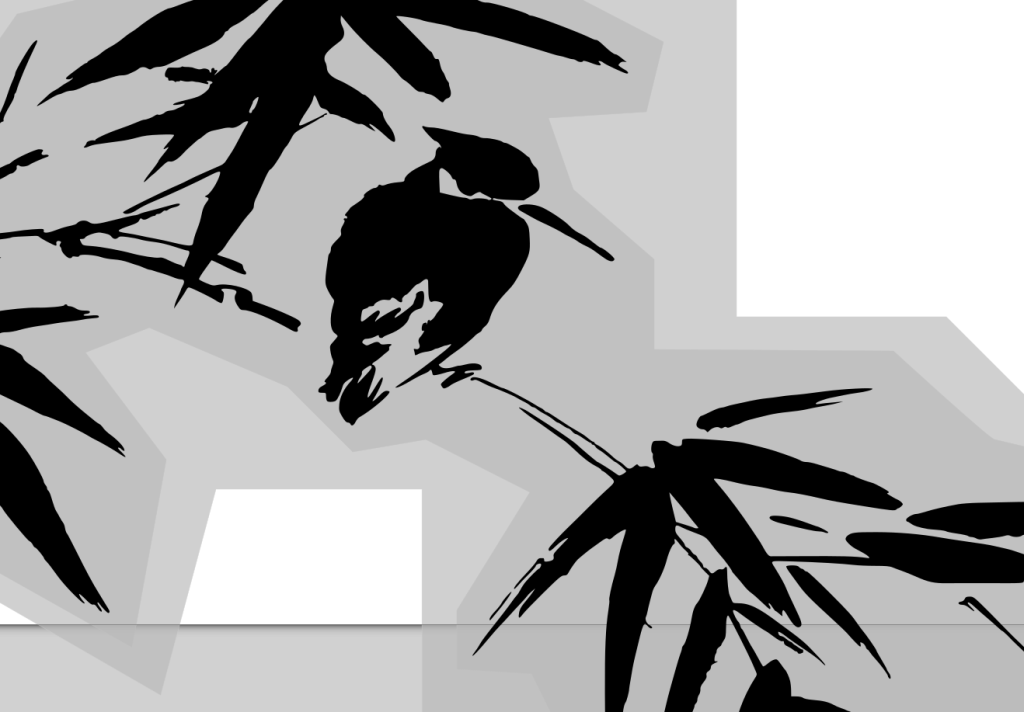
The middle inlay is from the painting Kingfisher and Bamboo, which had been previously attributed to the medieval Japanese painter Sesshū Tōyō (1420-1506) but is now believed to have been made in the 19th century. With this one, I had to extensively manually clean up the converted vector image.
The bottom inlay is adapted from a stock image described as being of sakura (cherry blossom flowers), but could be seen as resembling plum blossom flowers. It’s special as the first sword boffer of mine to use multi-color vector inlays (gold flowers with a silver stem).
Sometimes I wonder what the old artists would think about knowing their work is being carried forward in this way, through many layers of hand-crafted and digital tools to create replicas in such different formats than they could ever have seen.
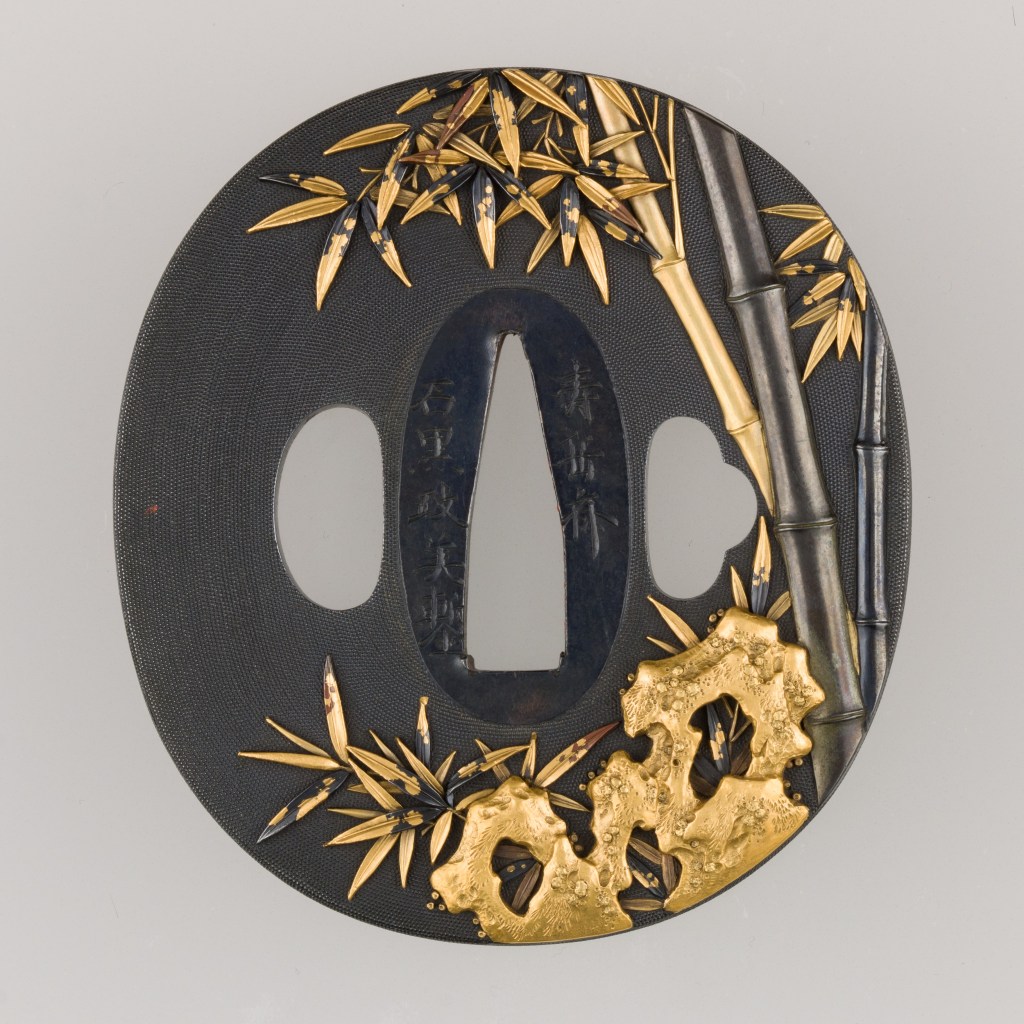
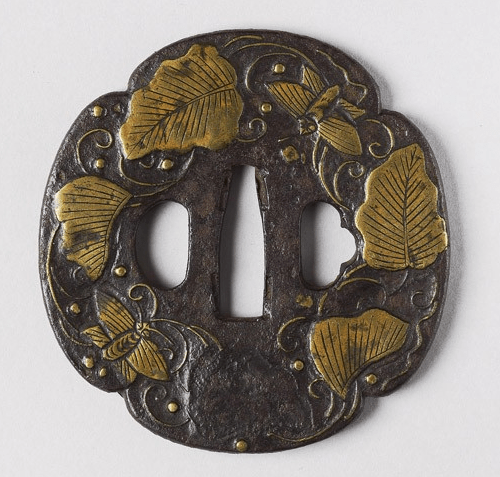
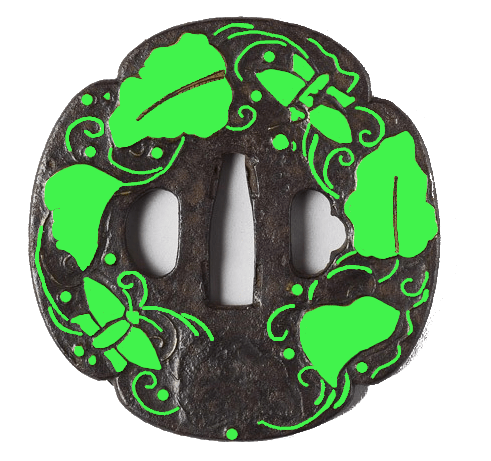
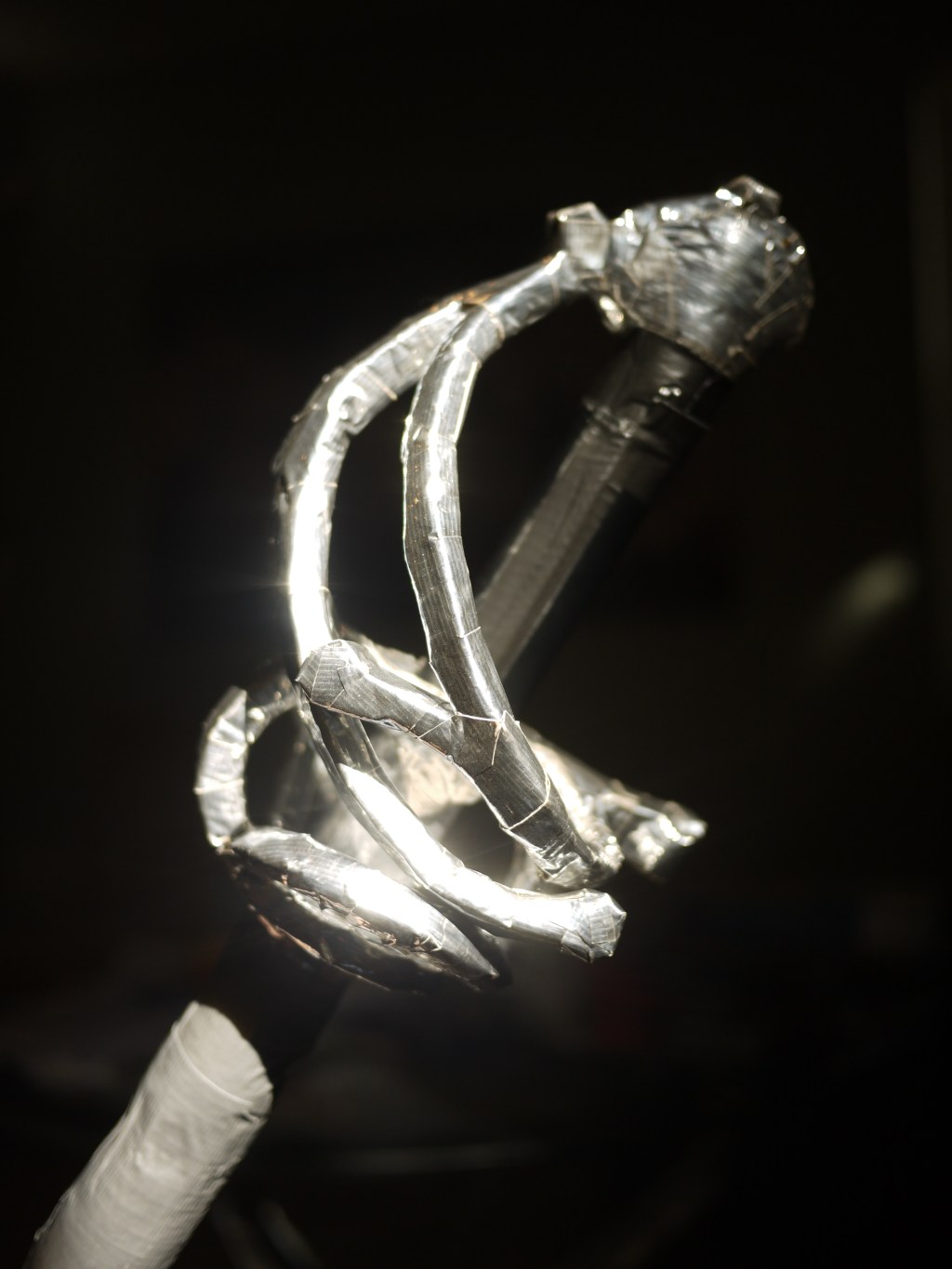
The tsuba, handguards, are also from work of past centuries. One is from a tsuba inscribed with bamboo imagery by Ishiguro Masayoshi in the 19th century (to match the other bamboo inlay of the katana), and the other is a mokkō-shaped tsuba with brass leaves and butterflies from the 17th century by the Shōami School of swordcraft. In the latter case, I manually traced over the entire image to create a version of it that could work for boffers.
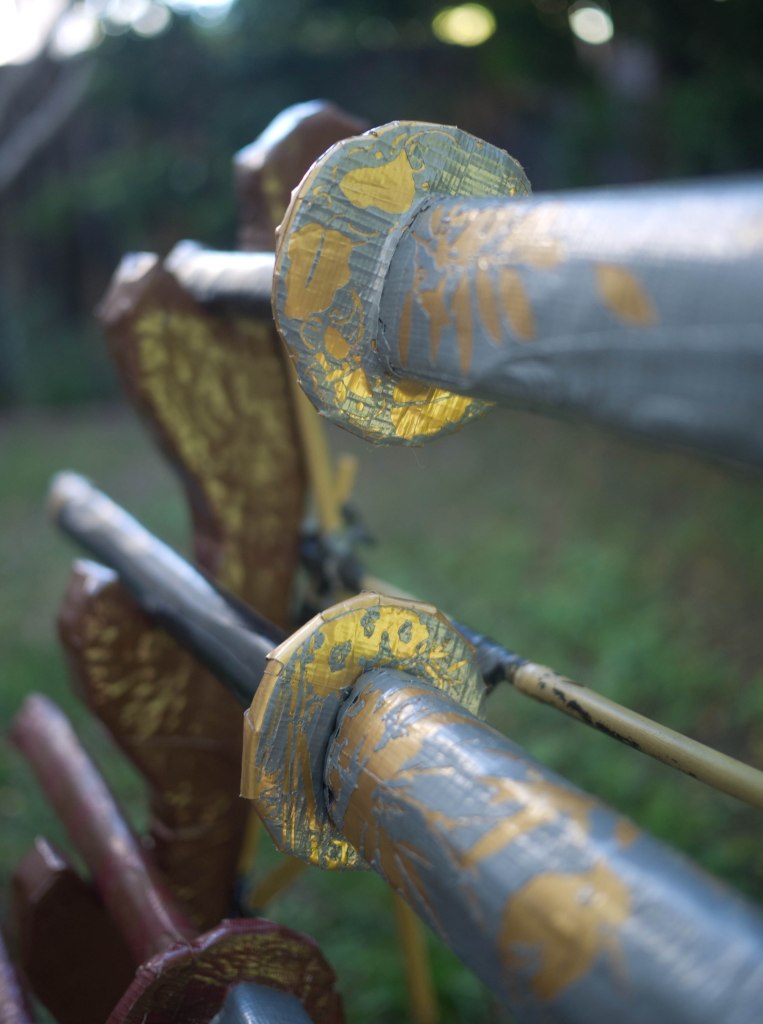
There are some beautiful works of sword art out there, and I want to see how much of it we can carry forward and celebrate while having fun with boffer events.
The nagamaki is also a work of engineering advancement. Using the same carbon fiber core as the longer Riftlands Spear, I added a composite-foam blade to make it especially soft, because I wanted it to be safe to move around very quickly as it potentially fends off multiple opponents. The nagamaki originates from the ōdachi (大太刀, large/great sword), which is like a katana with an extremely long blade. Many soldiers wrapped the first foot of the long blade with cord so that they could also grip it there with one hand, and so swordmakers adapted by simply making a much longer handle. This allows for a wider grip, as is also used in some greatsword/claymore techniques.
The tip of the blade is modeled after a naginata, a glaive, which is why it’s more curved. In the LARP context this means that if you thrust with it, the force can collapse sideways a little bit, which can potentially reduce the impact further. This piece is 6’0″, and 10.4 ounces (295 grams), which is about 7″ shorter than the standard spear in this league, for greater maneuverability, and about 36% lighter, and has a much longer striking area with more padding, so you can really whirl it around. The pommel end is padded too (and has a small blossom inlay). The balance point is exactly in the middle where the handle meets the blade.
Rounding out the collection is a tantō, which in this case also has a sheath. I found a new color of duct tape to use for this, to give the handle a more maroon hue, which I also used for one of the katana wrappings.
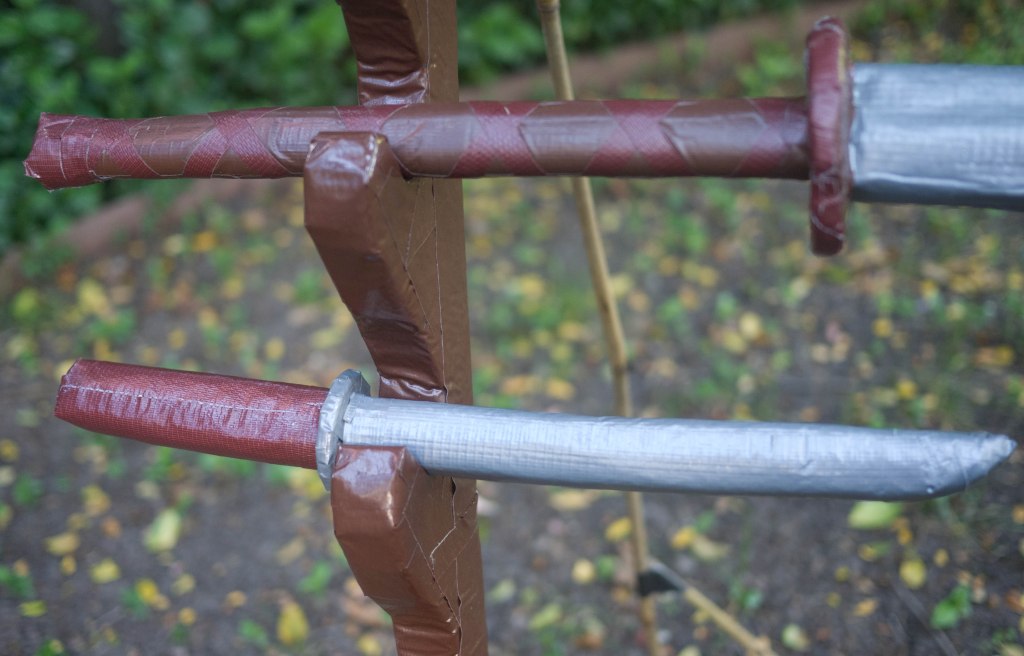
All these pieces have carbon fiber cores, for lightweight strength. The Wakizashi and Katana have faux leather wrapping their handles, which allows for a much more responsive grip but increases the handle’s weight. The blades themselves are made with very lightweight foam. The longer katana has 15 grams added to its pommel to move the balance point to just a few inches from the handguard.
Wakizashi: 2’6″, 117 grams (4.1 ounces)
Katana with inlay: 3’9″, 189 grams (6.7 ounces)
Nagamaki: 6’0″, 295 grams (10.4 ounces)
Katana without inlay: 3’5″, 159 grams (5.6 ounces)
Tantō: 1’2″, 20 grams (0.7 ounces)
I started the “[season] collection” post format as a joke but I guess it’s becoming increasingly accurate.
May your adventures be wonderful and your boffers swift.

 Nico's Workshop