Lightweight foam props designed to resemble historical or fictional arms & armor while actually being soft and safe to bop people with (I think the word for these props, “boffers,” is a bit of an onomatopoeia). Some groups simply bring a variety of boffers of all kinds and set up games of capture-the-flag, objective-guarding, etc., in which tagging someone with a boffer (you don’t put a lot of force into it, just tag, parry, feint, etc) means they’re out for the round. If the boffers are designed well, this not only provides great athletic exercise but also gives you an appreciation of the art/strategy behind various historical styles of sword-wielding.
Many groups add a layer of intrigue on top of this, creating a persistent fictional setting in which outcomes are tracked, and the players take on the role of characters who make tough decisions within the simulated world. When done with sufficient complexity, style, and thoughtfulness, it’s a great way to teach folks stuff like international diplomacy. Similar to D&D, yeah, except that instead of resolving “did you defeat them” with dice rolls, it’s done by actually initiating the combat encounter with props on a nice open field and observing the results. This approach is called LARP, or Live-Action Role-Playing. One of my good friends runs a LARP league like this, which is what I make most of these props/boffers for.
All boffers made to resemble historical/fictional weapons are made from soft foam and lightweight materials, to be safe to engage in faux combat with, as long as you don’t really wind up and intentionally smack someone hard in the face (which would be against the rules of the game, anyway!). The LARP leagues I’ve interacted with have had a consistently good safety record.
I personally pride myself on using some engineering tricks to make boffers that are even safer than the usual standard, even among the leagues whose safety standards are designed with the participation of children in mind. It’s possible that I’m a little bit over-vigilant about this stuff because of my background in successfully keeping rambunctious groups of kids safe and happy while leading trips through places that require you to keep an eye out for hazards, like the wilderness of state parks, or mountains, or New York City during rush hour when there aren’t any other adults available and we have to take the subway. Anyway.
All the swords and sword-esque weapons are made with thin carbon-fiber tubes as cores, which I chose as the most lightweight material available to provide enough rigidity to have a satisfying structure. Around that is typically a layer of low-density closed-cell polyethylene foam for padding around the core. In my composite foam designs, there’s a layer of even-lower-density open-cell polyurethane foam for further squishability and lightness, surrounded by a thin layer of closed-cell foam.
Looks cool, though, eh?
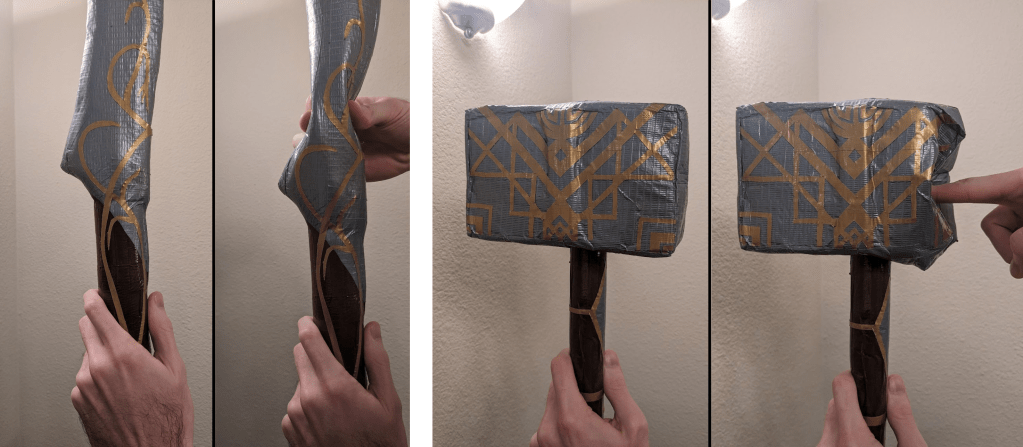
With the external appearance of hard sharpness, while actually being quite soft and yielding to the slightest pressure, it’s a wonder none of them has ever been asked to host a reality television program.
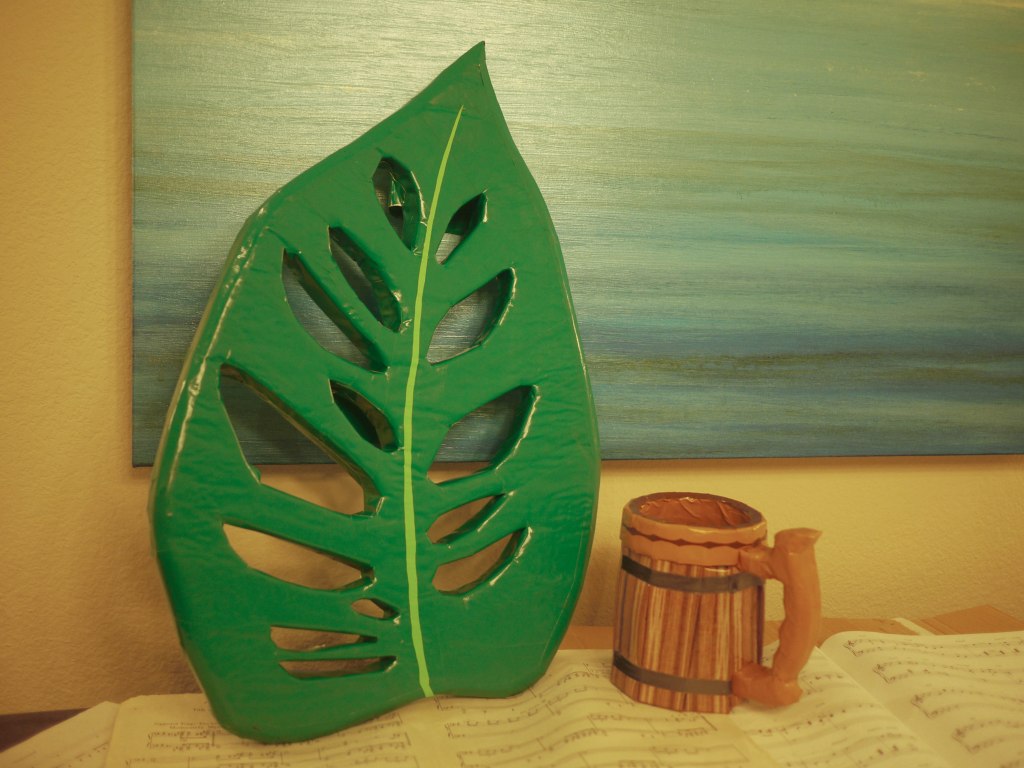
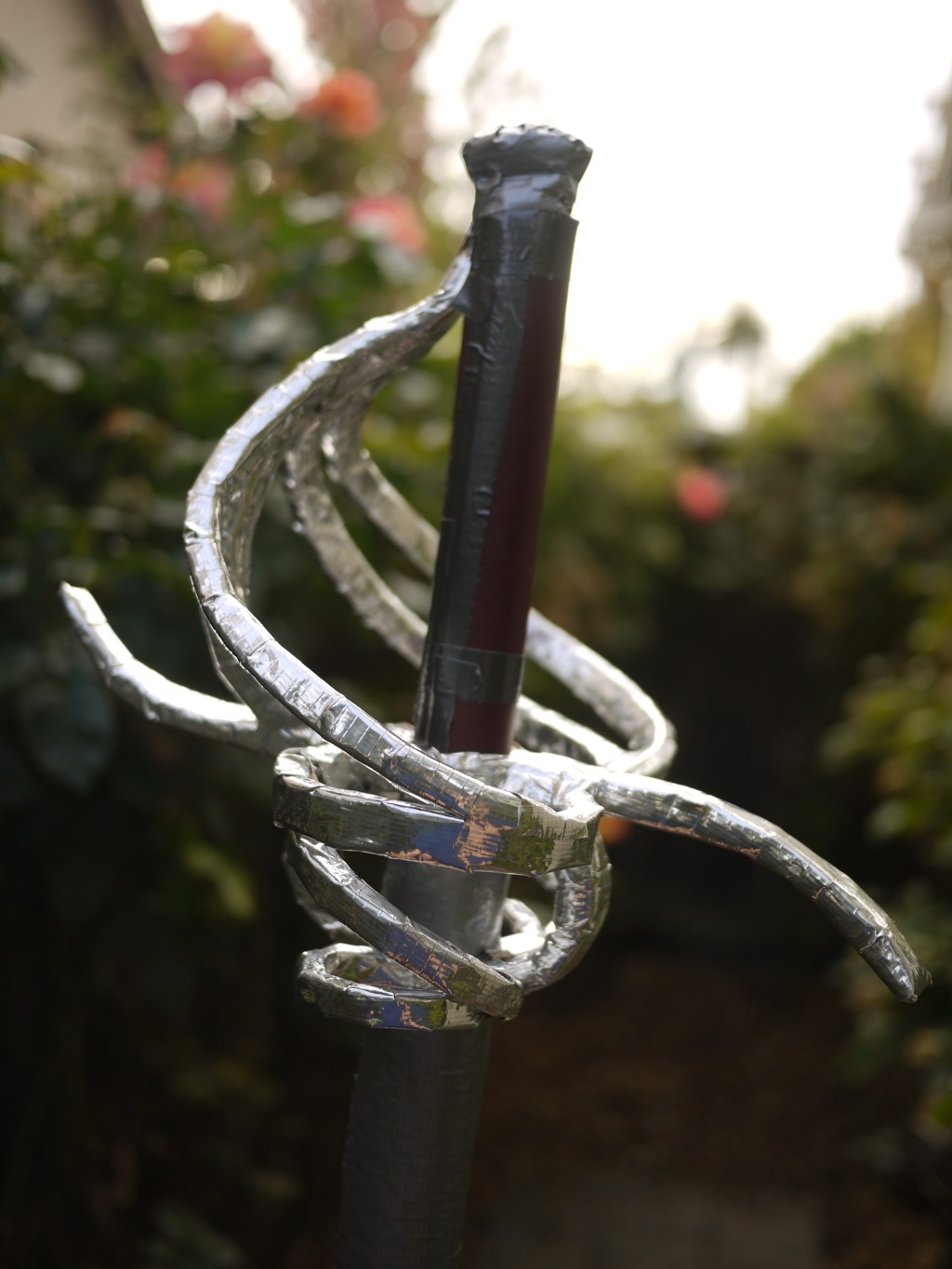
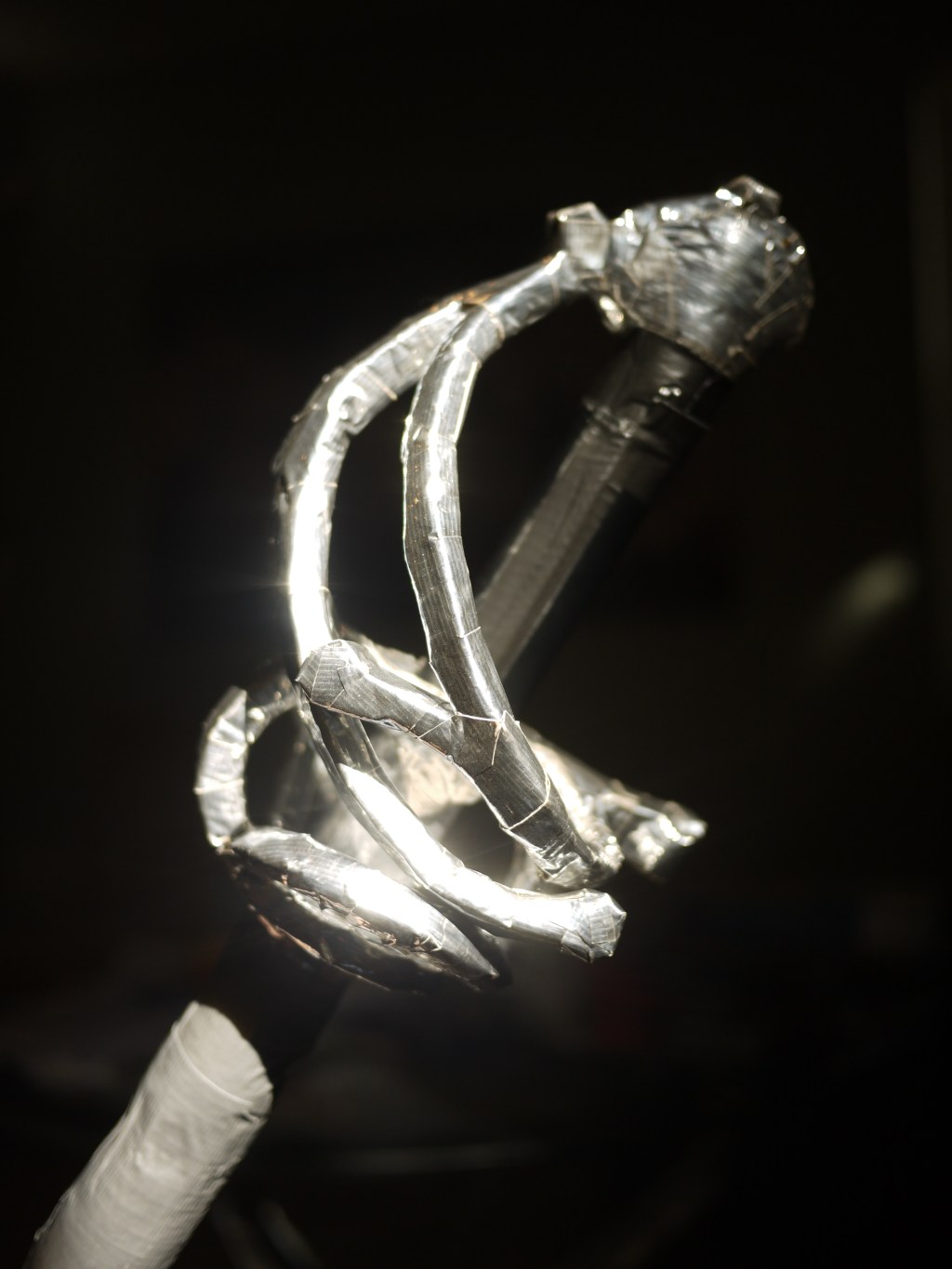
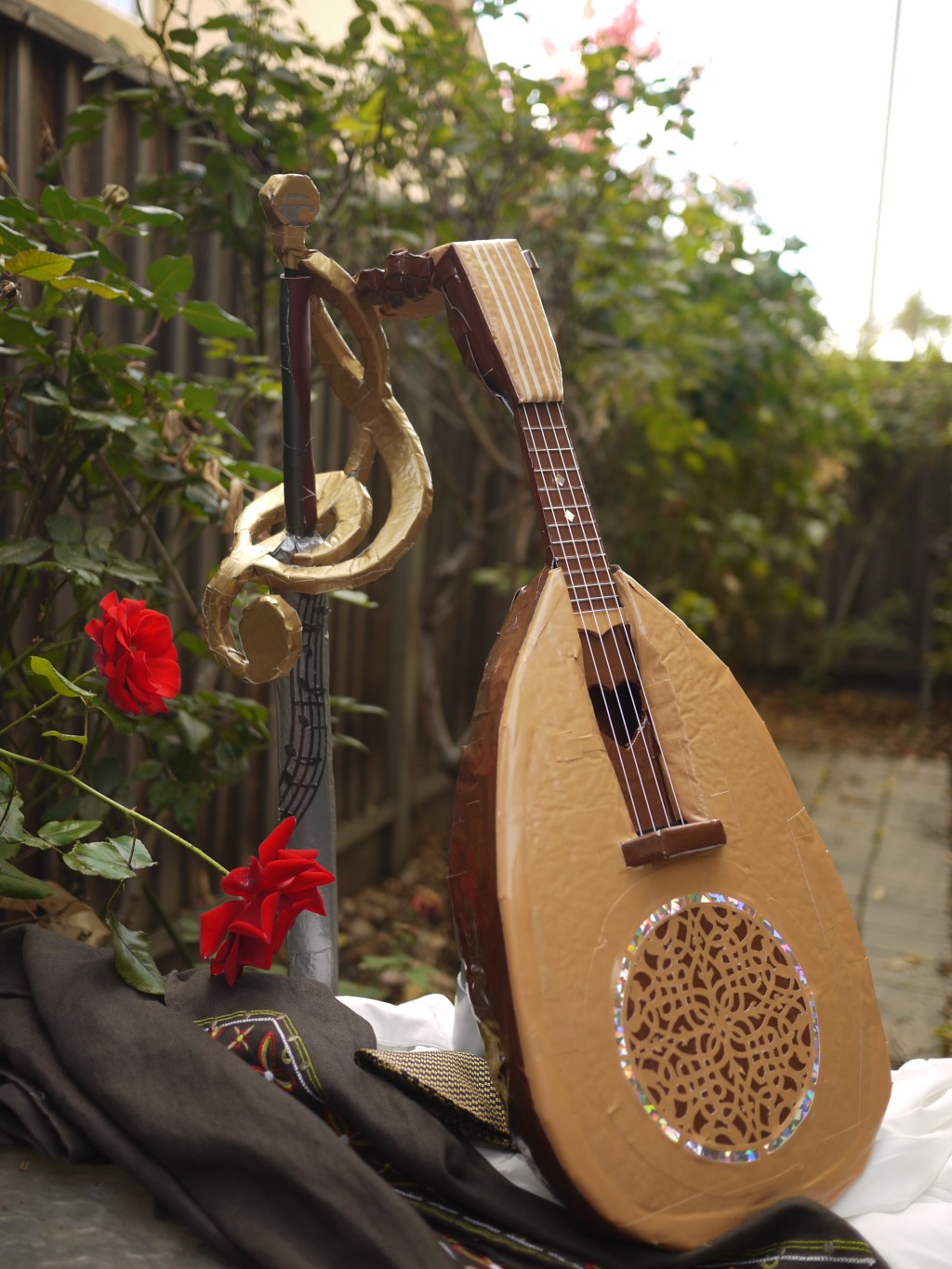
 Nico's Workshop