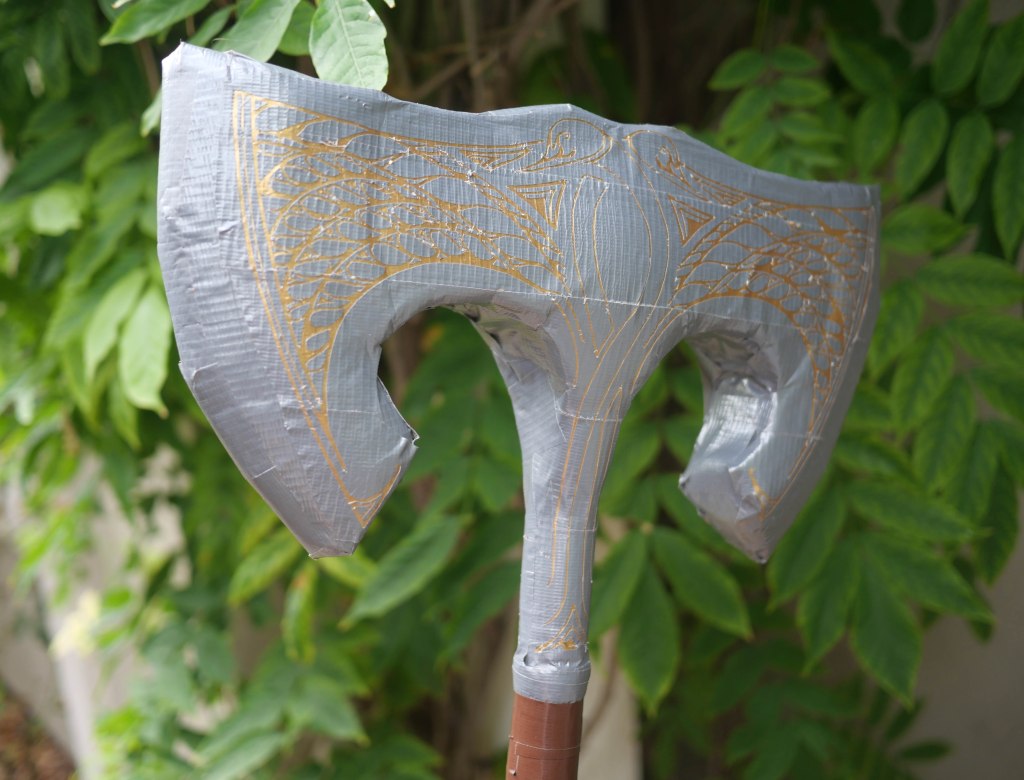
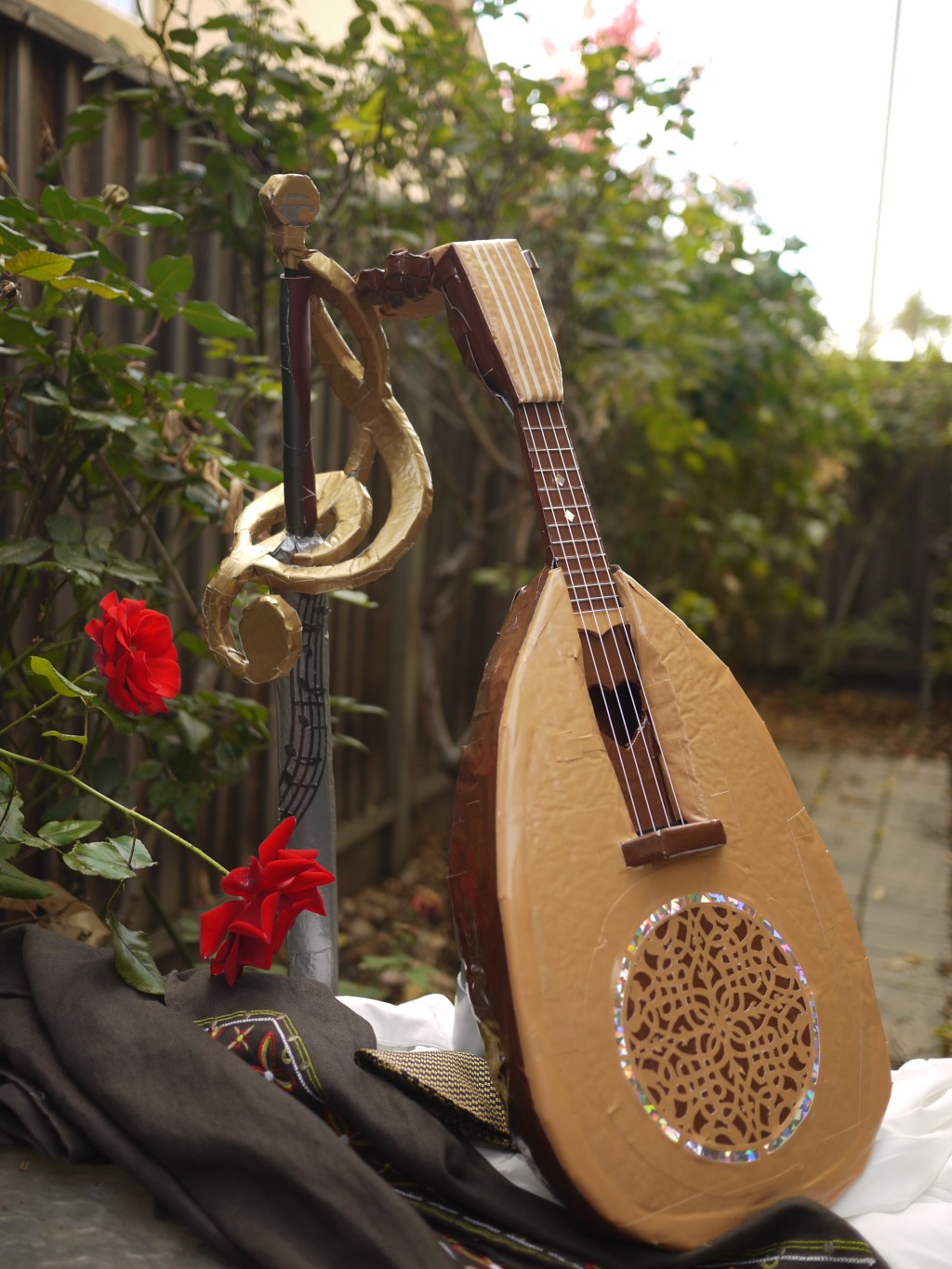
Here’s a spotlight of some of the boffers I’ve crafted to resemble specific pieces from museums, starting with a 1,000-year-old Scandinavian axe head.
Here’s how the Metropolitan Museum of Art describes it:
“Although the collection of the Department of Arms and Armor numbers approximately 14,000 objects, the Museum has comparatively few examples of early medieval European armor or weapons, and even fewer with a large degree of decoration or in non-excavated condition. This Scandinavian axe head, therefore, makes an important addition to the collection as a fine medieval piece and in particular for being the first elaborately decorated Viking axe head to become part of the permanent collection. Decorated weapons – swords, axes, spears – were the most highly valued possessions of Viking men, essential as symbols of their rank and status within society, in addition to serving as functional fighting equipment. This axe head is an excellent example of the broad axe form, and is rare and significant for the extent and intact state of its scrollwork ornament, richly inlaid in silver wire.”
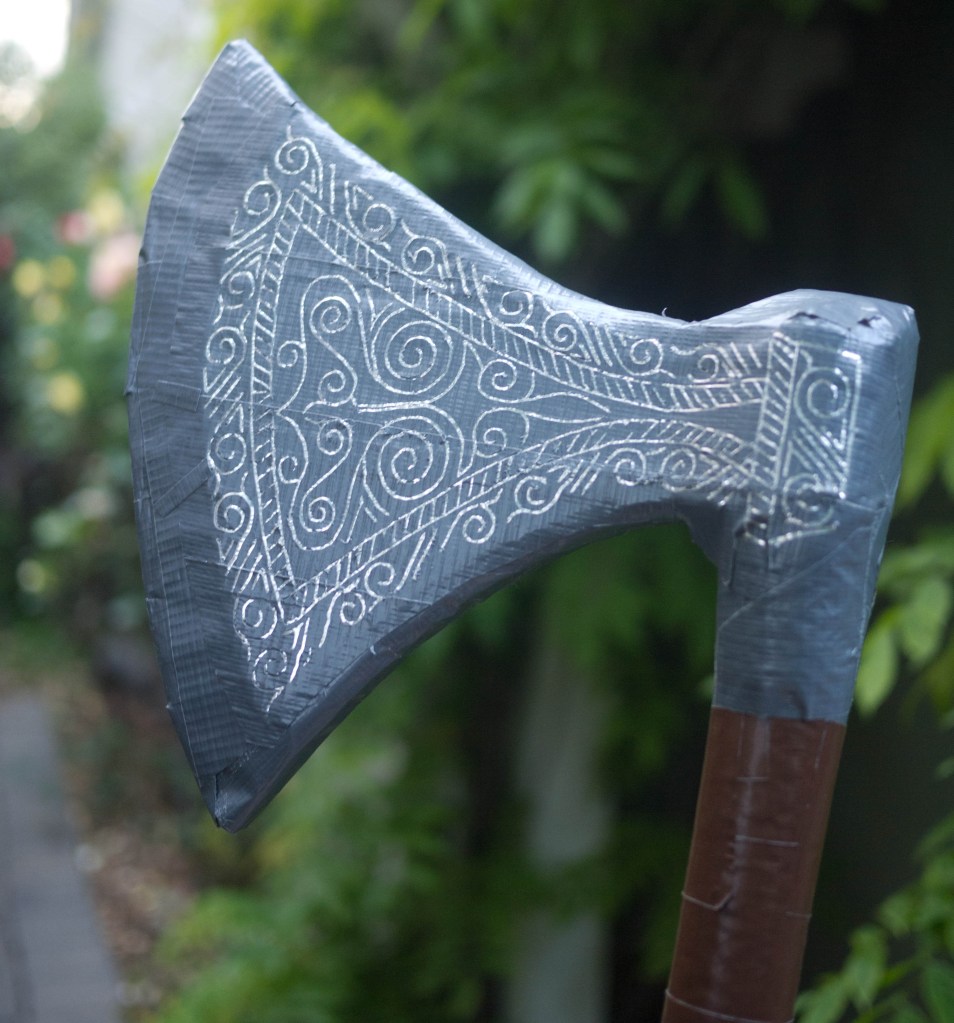
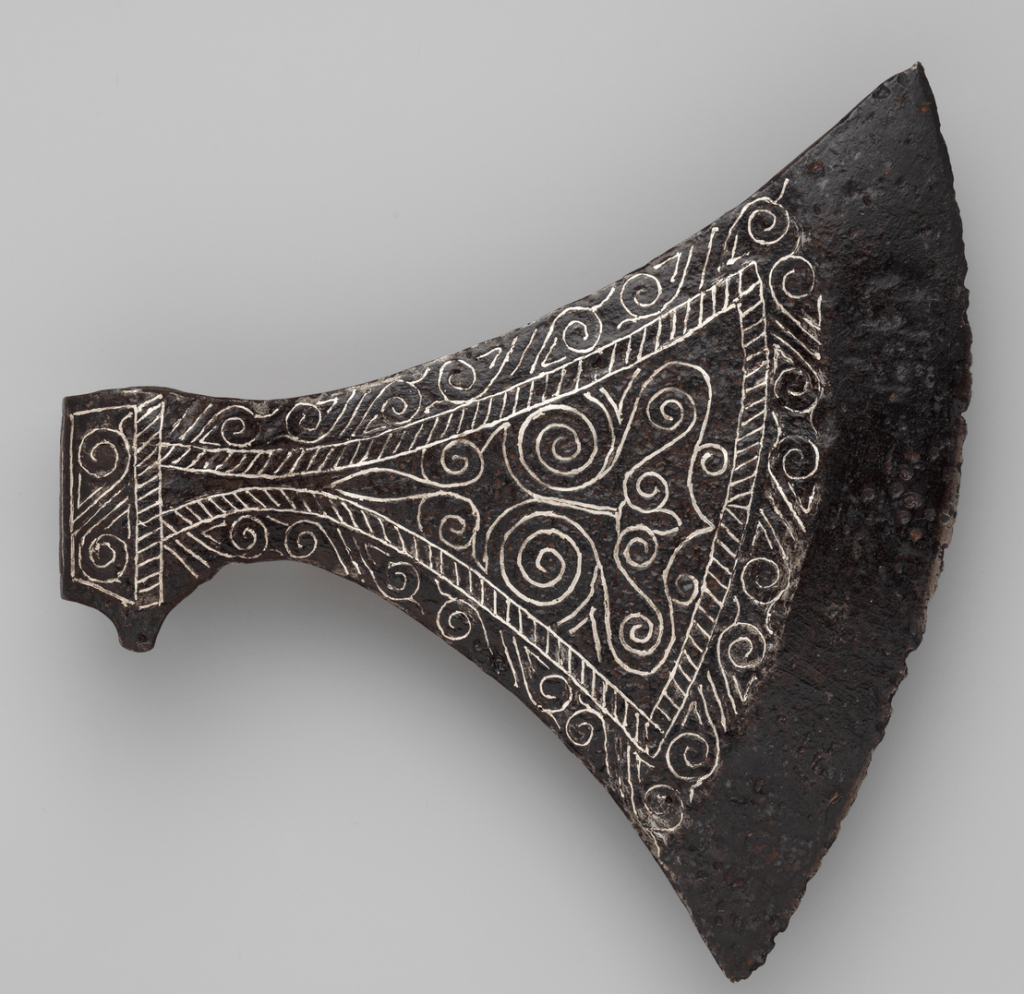
This seemed worthy of recreation — painstakingly inlaid silver scrollwork from a thousand years ago. I hand-traced the whole pattern on my computer, since it wouldn’t be smooth enough to automatically convert. I retained many of the quirks of the imperfect lines and age, so you can still see places where lines are irregular or incomplete, copied exactly from that ancient relic.
Below are some more examples, alongside pictures of the museum pieces they’re based on
Jambiya, Persian, Qajar, 19th Century (Met Museum page here)
Kard, Persian, ca. 1800 (Met Museum page here)
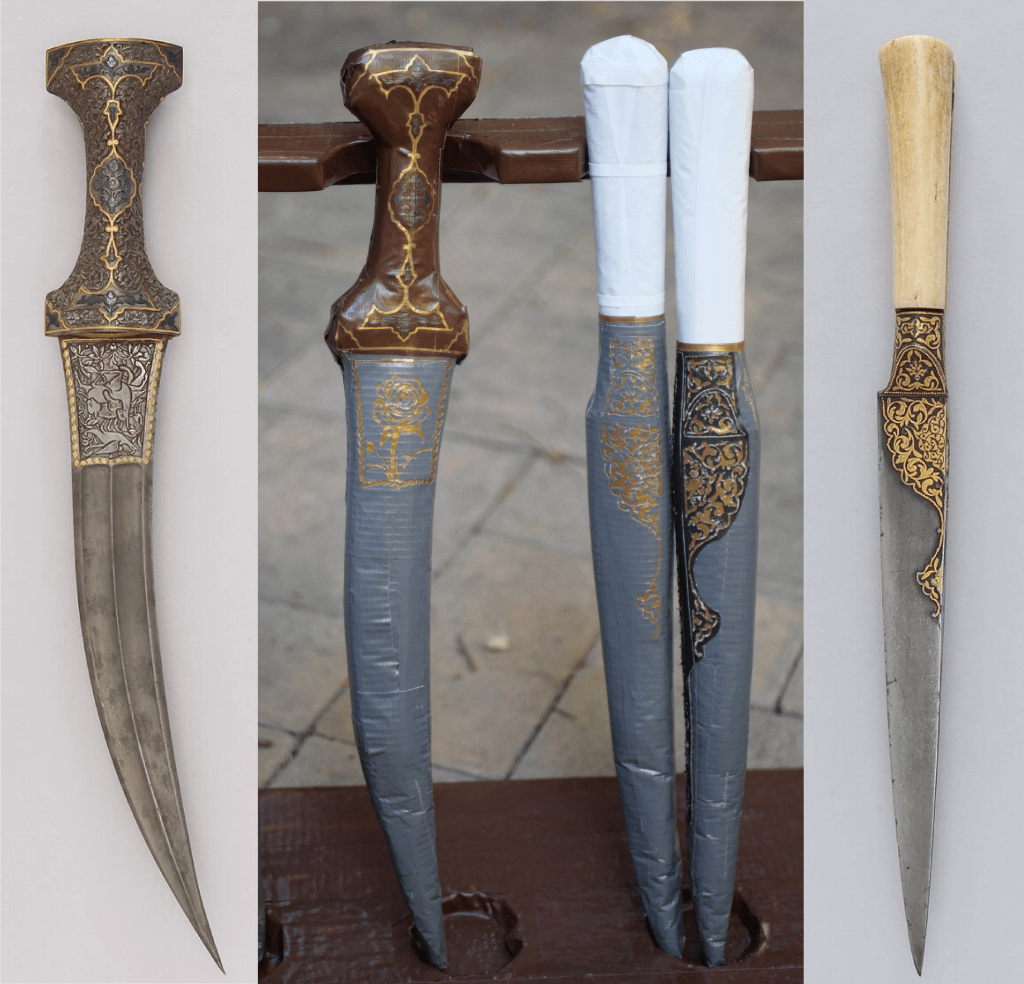
The Jambiya (left) required particularly intricate work to get those multiple colors of inlays to show up. Rather than trying to get everything exactly the same, I drew on the original as an inspiration while adapting them a bit to the format of foam boffers to tag with.
There are also some cases where I don’t create inlays or details at all, but I do base the overall shape/outline on specific museum pieces. I figure since I’m making a knife anyway, it might as well be reminiscent of a knife that actually existed. Here are some of those, in which you can see just the basic familiarity of the outline, but I didn’t create all the extra decorations:
Piha Kaetta, Sri Lankan, 18th–19th century (Met Museum page here)
Knife, Indian or Nepalese, 18th-19th century (Met Museum page here)
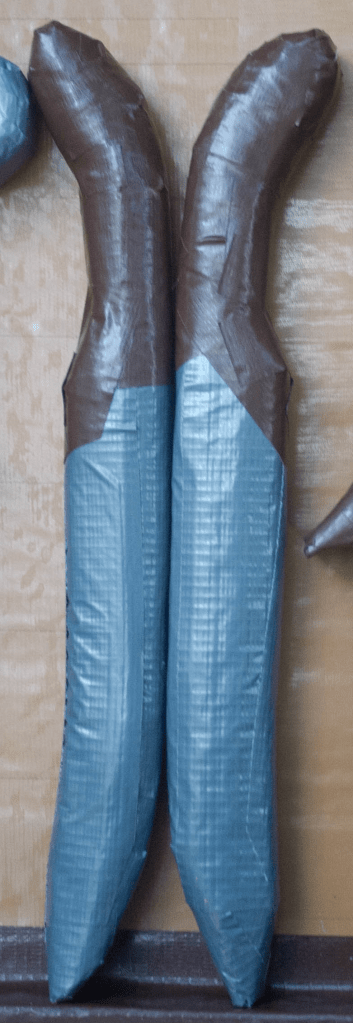
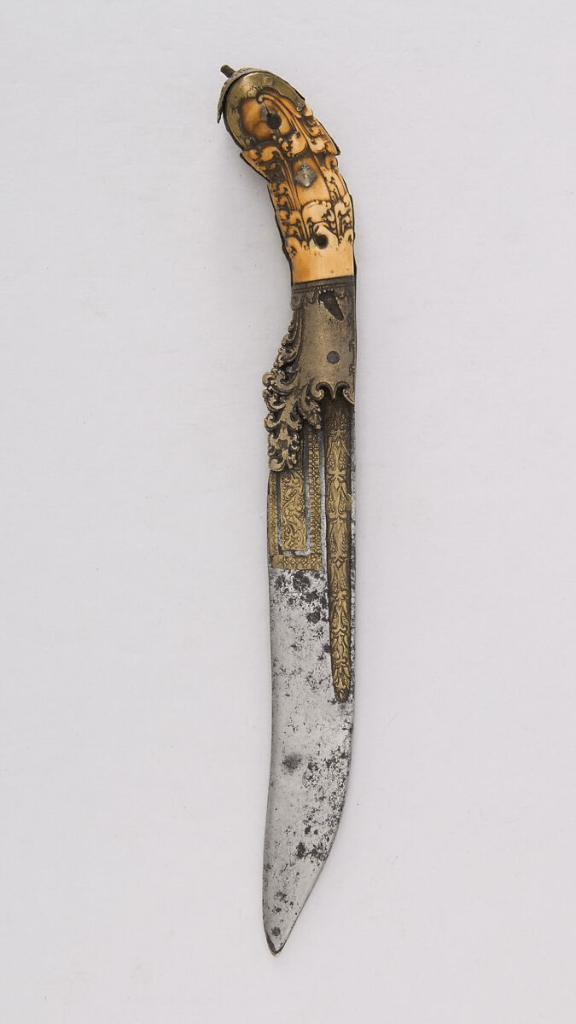
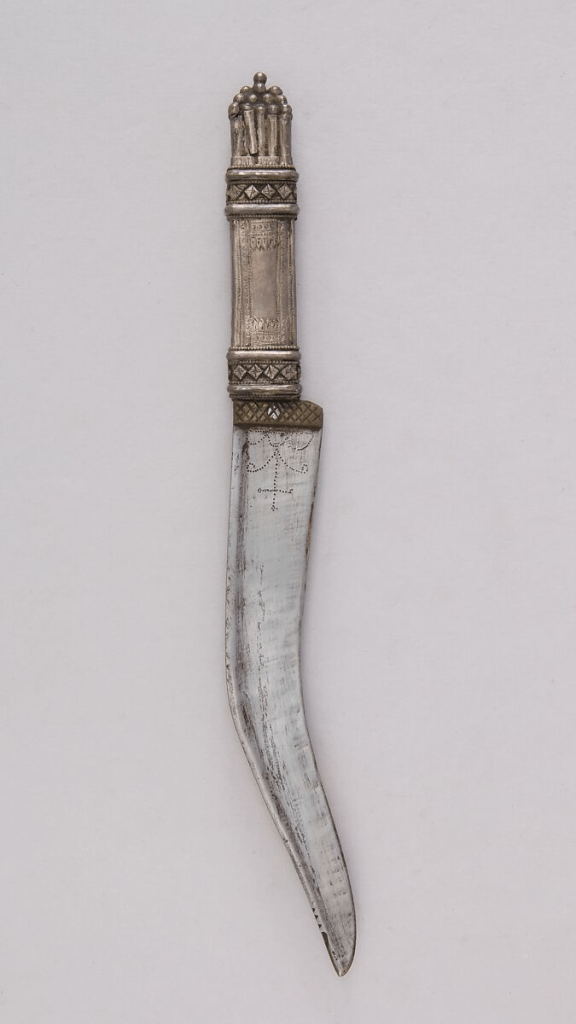
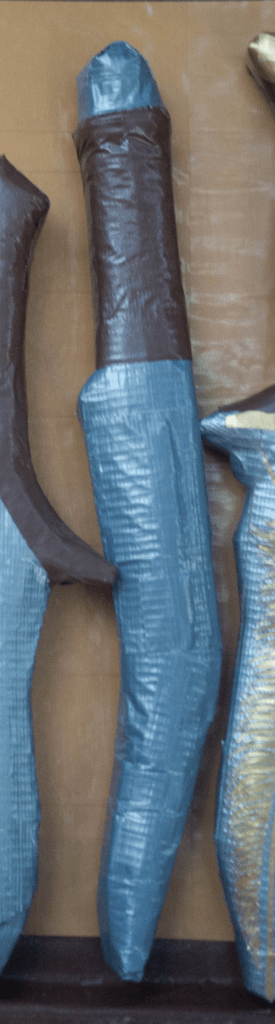
Hunting Knife, Austrian, ca. 1500, Bladesmith Hans Sumersperger – Met Museum page here
Knife, Philippine, Luzon or Visayan Islands, 18th-19th century – Met Museum page here
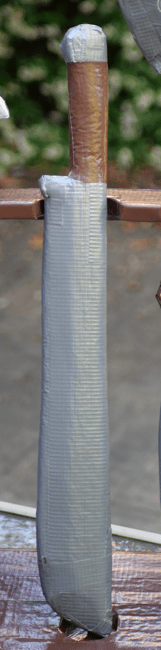
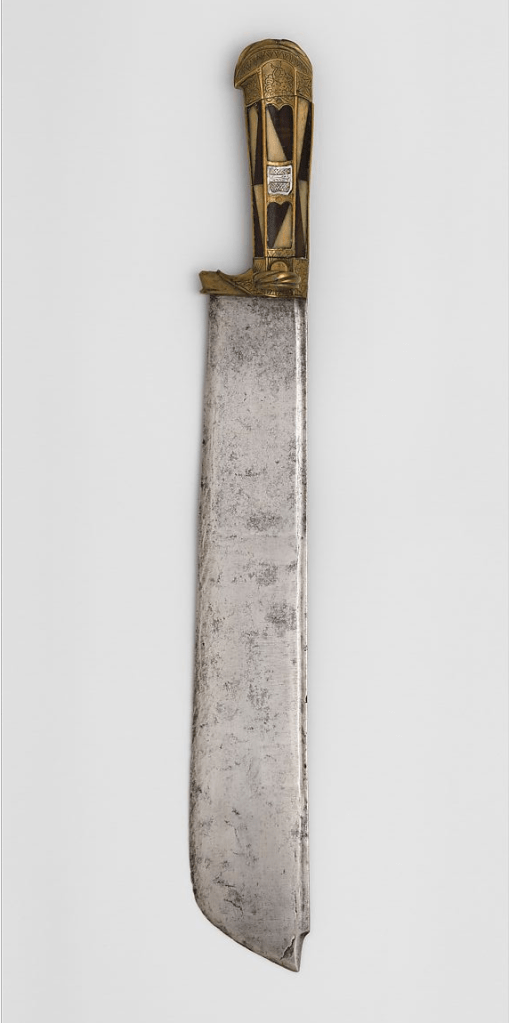
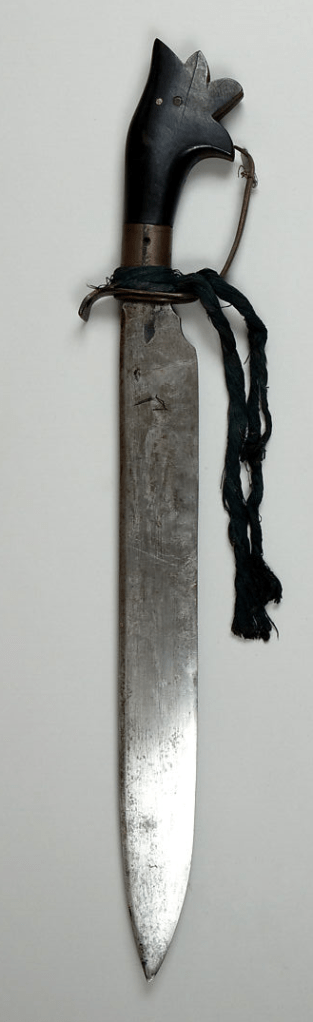
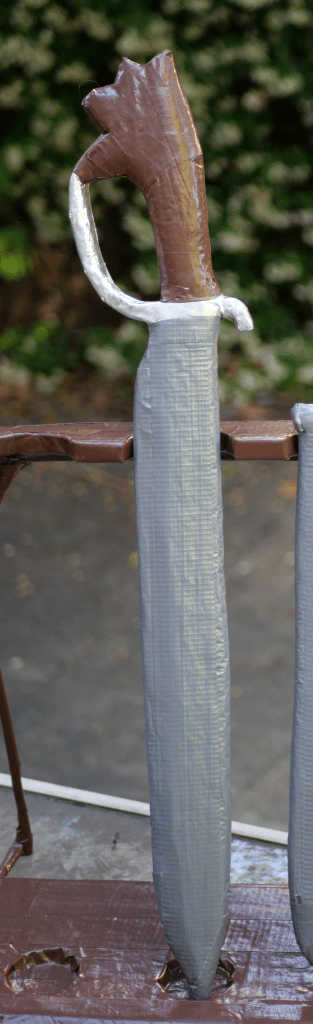
Sometimes I base my design on a non-museum replica of a particular type of weapon. Here’s a Greek Xiphos and an Iberian Falcata:
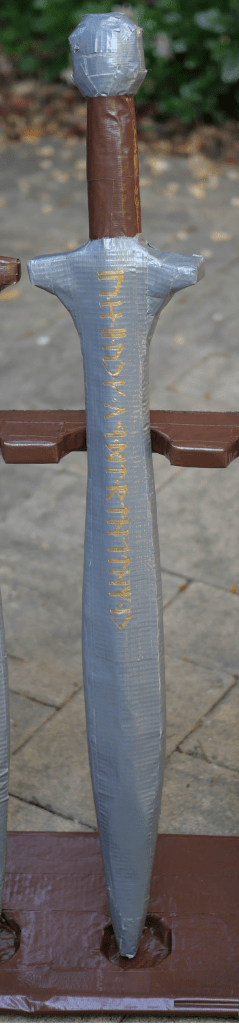
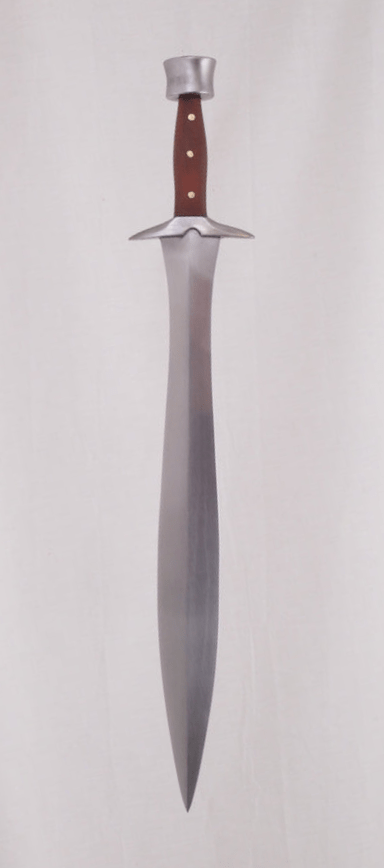
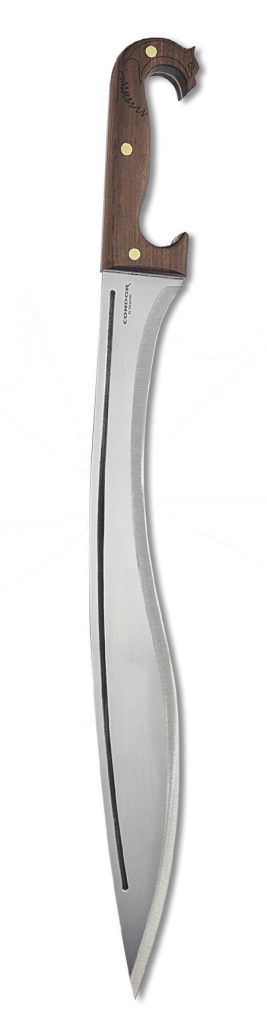
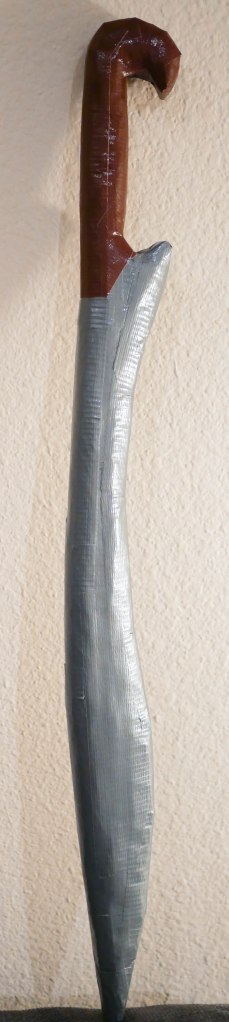
It’s fun, and challenging, to create new structures that recreate many of the unique designs of ancient bladesmiths while using wildly different materials and simultaneously making them safe to hit other players with. That confluence of ancient design and playing a modern tag game makes for some fascinating results.